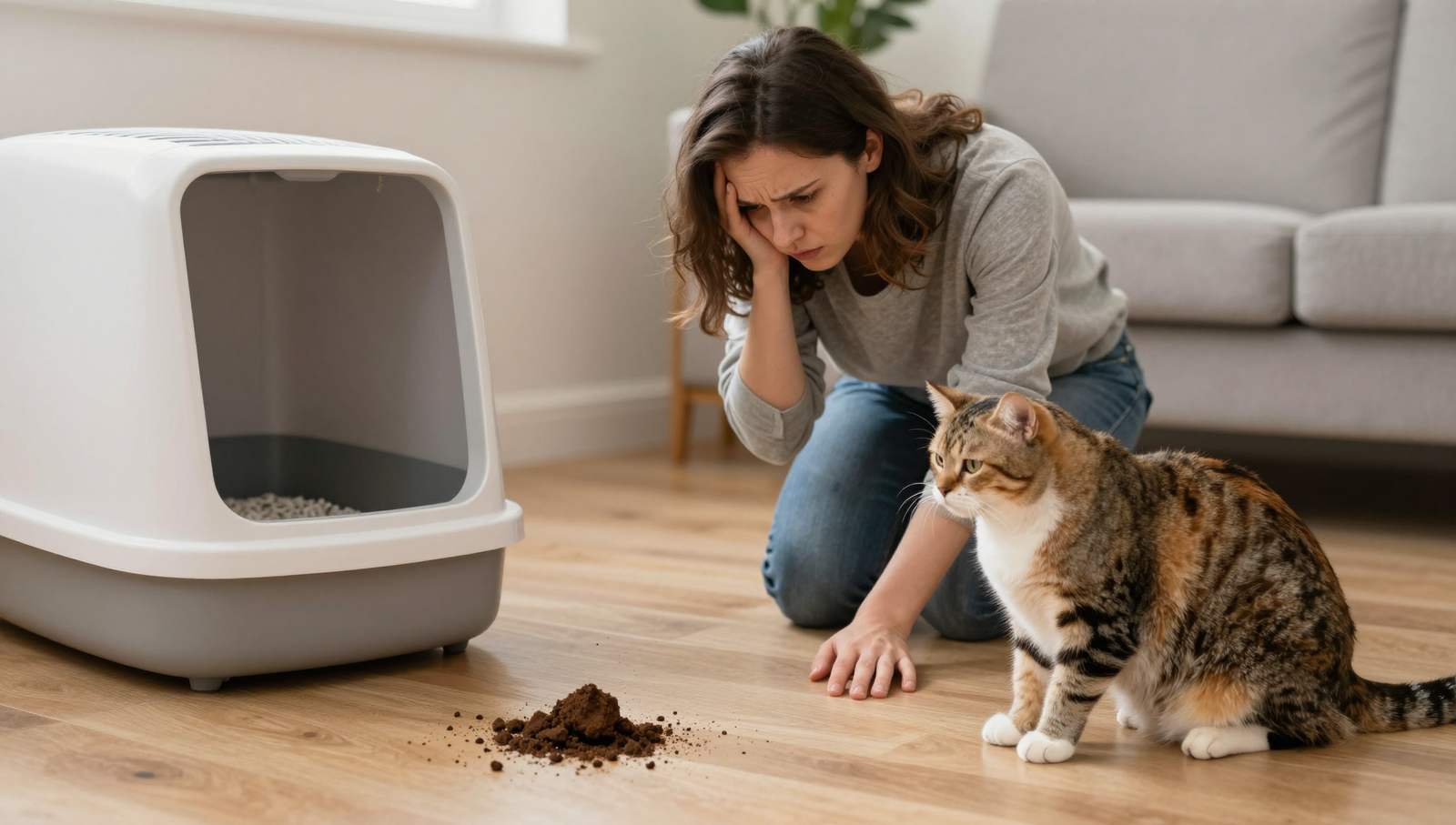
Let me paint you a picture. You walk into your living room, cup of tea in hand, ready to settle down for a quiet evening. Then you step in something soft. And warm. And absolutely not what you were expecting. Yes, I’m talking about cat poop on your floor. If you’ve been frantically Googling “why is my cat pooping on the floor”, take a deep breath. You’re not alone, and more importantly, there’s usually a solution.
As someone who’s spent years working with feline behaviour and has cleaned up more than my fair share of “floor presents” from my own cats, I can tell you that this isn’t your cat being spiteful or naughty. Cats don’t do revenge — that’s a human concept. When a cat starts pooping outside the litter box, they’re trying to tell you something. The trick is figuring out what.
In this guide, I’ll walk you through the ten most common reasons why your cat might be pooping on the floor, along with practical solutions that actually work. Whether you’re dealing with a brand new kitten or a senior cat who’s suddenly changed their habits, there’s something here for you.
Is Your Cat Pooping on the Floor a Medical Emergency?
Before we dive into behavioural reasons, let’s address the elephant — or should I say, the cat — in the room. The very first thing you should do when your cat starts pooping on the floor is book a vet appointment. I cannot stress this enough.
Health issues are often the hidden culprit behind litter box problems. Conditions like constipation, diarrhoea, inflammatory bowel disease, or arthritis can make using the litter box uncomfortable or even painful. I once had a cat who started pooping right next to the box, and it turned out she had severe arthritis in her hips. The litter box sides were too high for her to climb over comfortably.
Key health signs to watch for:
- Straining or crying when pooping
- Blood in the stool
- Changes in appetite or thirst
- Weight loss or gain
- Lethargy or hiding
- Vomiting alongside the pooping issue
If your cat shows any of these symptoms alongside pooping on the floor, don’t wait. Get them to the vet pronto. Older cats are especially prone to arthritis and cognitive decline, which can affect their toileting habits. A simple check-up could save you months of frustration and your cat a lot of discomfort.
The Litter Box Itself Might Be the Problem
You know how some public toilets make you want to hold it until you get home? Cats feel the same way about their litter boxes. If your cat is pooping on the floor, the litter box itself could be the issue. And let me tell you, cats are incredibly fussy about their facilities.
Size and Style Matter
Most litter boxes sold in pet shops are too small for adult cats. Imagine trying to do your business in a phone box — not pleasant, right? Your cat needs enough space to turn around, dig, and squat comfortably. As a general rule, the litter box should be one and a half times the length of your cat from nose to tail.
Covered boxes can be problematic too. While they offer privacy, they also trap odours and can make your cat feel trapped, especially if there’s only one exit. I’ve seen cats who were perfectly fine with open trays but refused to use covered ones. On the flip side, some cats prefer the privacy. It really depends on your individual feline.
The Cleanliness Factor
Here’s a truth bomb: cats are cleaner than many humans. They don’t want to use a dirty toilet any more than you do. If you’re not scooping daily and doing a full litter change weekly, your cat might just decide the floor is a better option.
| Cleaning Frequency | What to Do |
|---|---|
| Daily | Scoop solid waste and clumps |
| Weekly | Empty all litter, wash box with mild soap, refill |
| Monthly | Replace the litter box entirely (plastic absorbs odours) |
Pro tip: Avoid using strong-smelling cleaning products. Cats have a sense of smell that’s fourteen times stronger than ours. That lemon-fresh cleaner might smell lovely to you, but to your cat, it’s like trying to use a toilet that’s been drenched in perfume.
Why Is My Cat Pooping on the Floor? The Litter Preference Factor
Now we’re getting to the nitty-gritty. One of the most common reasons why your cat is pooping on the floor is simply that they don’t like the litter you’re using. Yes, cats can be that picky.
I learned this the hard way with my own cat, Marmalade. I bought a bargain brand of clumping litter on sale, thinking it would save me a few quid. Within days, he was pooping on the bathroom mat. The moment I switched back to his usual brand, he was happily using the box again. Lesson learned: never mess with a cat’s litter preferences.
Types of cat litter and what cats think of them:
- Clumping clay: Most popular, good odour control, but can be dusty
- Non-clumping clay: Cheaper but needs more frequent changes
- Silica gel crystals: Excellent odour control, low dust, but some cats dislike the texture
- Wood pellets: Eco-friendly, natural smell, but less absorbent
- Paper-based: Great for sensitive paws, but can get smelly quickly
- Corn/wheat based: Biodegradable, clumps well, but can attract bugs
If you want to switch litters, do it gradually. Mix a small amount of the new litter with the old, increasing the ratio over a week. Sudden changes can confuse your cat and trigger floor pooping. Also, most cats prefer unscented, fine-textured litter that feels soft under their paws. Think beach sand, not gravel.
Location, Location, Location
You wouldn’t want your toilet in the middle of a busy motorway, and your cat feels the same way about their litter box placement. If your cat is pooping on the floor, take a hard look at where you’ve positioned the box.
Cats need privacy and safety when they’re at their most vulnerable. If the litter box is in a high-traffic area, near a loud washing machine, or next to a door that suddenly opens, your cat might feel too exposed to use it properly.
Ideal litter box locations:
- Quiet corner of a spare room
- Inside a large cupboard with the door slightly ajar
- In a quiet hallway away from foot traffic
- In a dedicated cat room or utility area
Avoid these spots:
- Next to the cat’s food and water bowls (would you eat next to your toilet?)
- In dark, hard-to-reach basements
- Near noisy appliances
- Right outside the cat flap (other cats might ambush them)
If you have multiple cats, make sure each box is in a different location. Cats are territorial, and one cat might guard the only litter box, forcing others to poop on the floor instead.
Stress: The Silent Cat Poop Trigger
Cats are creatures of habit. They thrive on routine and familiarity. When that routine gets disrupted, stress can manifest in all sorts of unpleasant ways — including pooping on the floor. I’ve seen cats start floor pooping because their owner moved a sofa three inches to the left.
Common stress triggers:
- Moving to a new home
- New baby, partner, or pet in the house
- Building work or home renovations
- Changes in your work schedule
- Visitors or parties
- New furniture rearrangements
- Even a new scent from a different laundry detergent
The solution? Identify the stressor and try to mitigate it. Use calming products like Feliway diffusers, provide plenty of hiding spots, and maintain as much routine as possible. Sometimes, simply giving your cat extra attention and playtime can work wonders.
Multi-Cat Households and Bullying
If you share your home with more than one cat, bullying could be the reason for the floor pooping. And here’s the tricky part: cat bullying is often so subtle that we humans don’t notice it.
True story: I had two cats who seemed to get along fine. They slept near each other, ate together, and never fought. But I started noticing that one cat would always wait at the bottom of the stairs until the other cat had passed. That was the bullying. The dominant cat was blocking access to the litter box, and the submissive cat was too scared to approach.
Signs of feline bullying:
- One cat stares at another for long periods
- A cat hesitates before entering a room
- One cat blocks doorways or corridors
- Silent stand-offs where both cats freeze
- One cat avoids certain areas of the house
The golden rule for multi-cat households is one litter box per cat, plus one extra. So if you have two cats, you need three litter boxes. Place them in different rooms so no single cat can guard them all.
| Number of Cats | Minimum Litter Boxes |
|---|---|
| 1 | 2 |
| 2 | 3 |
| 3 | 4 |
| 4+ | 5+ |
Sudden Changes and New Additions to the Home
Cats notice everything. I mean everything. That new sofa you brought home? Your cat noticed. The new brand of hand soap in the bathroom? Your cat noticed. The fact that you came home smelling of another cat? Oh, your cat definitely noticed.
If your cat is pooping on the floor suddenly, think back to what changed in the past few days or weeks. Sometimes the change seems insignificant to us but is massive to a cat. I once had a client whose cat started pooping on the floor because she’d moved her houseplants to a different windowsill. The cat’s favourite sunbathing spot was gone, and she was stressed.
Changes that can trigger floor pooping:
- New furniture or rearranged rooms
- New pet in the household or neighbourhood
- New baby or house guest
- Changes in your work hours
- Holiday season with more visitors
- Even changing your perfume or deodorant
The best approach is to introduce changes gradually. If you’re getting a new pet, do slow introductions over weeks. If you’re rearranging furniture, let your cat investigate at their own pace. And always make sure your cat has a safe, quiet space they can retreat to when things get overwhelming.
Training and Enrichment: Prevention Is Better Than Cure
Here’s something many cat owners overlook: pooping on the floor can sometimes be a sign of boredom or lack of enrichment. Yes, really. Cats need mental stimulation, and if they’re not getting it, they can develop all sorts of behavioural issues.
I’m not saying your cat is pooping on the floor because they’re bored — but it can be a contributing factor. A cat who’s mentally stimulated and physically exercised is generally a happier, more well-adjusted cat who’s less likely to develop problematic behaviours.
Enrichment ideas for indoor cats:
- Puzzle feeders that make them work for treats
- Cat trees and shelves for climbing
- Window perches for bird-watching
- Interactive toys like wand toys and laser pointers
- Catnip or silver vine toys
- Training sessions for tricks (yes, cats can learn tricks!)
If your cat has started pooping on the floor, try adding more enrichment to their day. A fifteen-minute play session before each meal can make a huge difference. It mimics their natural hunt-catch-eat-groom-sleep cycle and helps them feel more fulfilled.
The Pros and Cons of Owning a Cat Who Poops on the Floor
Let’s be honest: cleaning up cat poop from the floor isn’t anyone’s idea of a good time. But before you get too frustrated, let’s look at the bigger picture. Even cats with litter box issues have plenty of wonderful qualities.
| Pros of Cat Ownership | Cons of Floor Pooping |
|---|---|
| Affectionate companionship | Smelly cleanup duty |
| Natural pest control | Potential damage to flooring |
| Stress-reducing purrs | Extra laundry (rugs, mats) |
| Independent nature | Veterinary costs to diagnose |
| Entertainment value | Strain on the human-cat bond |
| Low-maintenance overall | Need for constant vigilance |
The good news is that most cases of floor pooping can be resolved with patience and the right approach. The vast majority of cats respond well to the solutions I’ve outlined above. It might take some trial and error, but you can get there.
Creating a Clean-Up and Prevention Plan
So, you’ve figured out why your cat is pooping on the floor (or at least you have some suspects). Now what? Here’s my step-by-step plan for getting things back on track.
Step 1: Thorough Clean-Up
You need to remove all traces of the accident. Cats have incredible noses, and if they can still smell poop in a certain spot, they’ll keep returning there. Use an enzymatic cleaner specifically designed for pet messes. These cleaners break down the proteins in poop and urine, eliminating the smell completely. Regular household cleaners just mask the odour — to a cat’s nose, the spot still smells like a toilet.
Step 2: Address the Root Cause
Work through the list of potential causes:
- Vet check-up first (always rule out medical issues)
- Litter box audit (cleanliness, size, type, location)
- Stress reduction
- Multi-cat management
- Litter preference experiments
Step 3: Make the Litter Box More Appealing
Sometimes you need to make the litter box irresistible while the floor spots are less appealing. Try:
- Adding a second litter box in a different location
- Using a different type of litter in one box (let your cat choose)
- Placing a litter box where your cat has been pooping
- Using attractant litter designed to draw cats to the box
Step 4: Patience and Consistency
Behaviour changes don’t happen overnight. It might take weeks for your cat to fully adjust. Be consistent with your cleaning routine, keep stress levels low, and celebrate small victories. When your cat uses the litter box correctly, give them praise and a treat.
When to Call in the Professionals
Sometimes, despite your best efforts, the problem persists. That’s when it’s time to call in reinforcements. If you’ve tried all the above solutions and your cat is still pooping on the floor, consider:
- A second veterinary opinion: Some health issues are hard to diagnose. A specialist might spot something your regular vet missed.
- A certified feline behaviourist: These professionals specialise in cat behaviour and can create a customised plan for your situation.
- A veterinary behaviourist: This is a veterinarian who also specialises in behaviour. They can prescribe medication if needed, alongside behavioural modification.
Don’t feel like a failure if you need professional help. Cat behaviour is complex, and sometimes we all need an expert’s perspective.
Frequently Asked Questions
Why is my cat pooping on the floor but peeing in the litter box?
This is actually a common pattern. It often suggests that the issue is specific to pooping rather than a general litter box problem. Medical causes like constipation or diarrhoea are top suspects. Your cat might associate the litter box with pain when pooping, so they avoid it for that purpose while still urinating there comfortably. Arthritis can also make it difficult for cats to squat properly for pooping.
Could my cat be pooping on the floor out of spite?
Absolutely not. Cats don’t experience spite or revenge — that’s a human emotion. When your cat poops on the floor, they’re communicating a need, not trying to punish you. They might be stressed, uncomfortable, or trying to tell you something is wrong. Always approach the problem from a medical and behavioural perspective, not an emotional one.
How do I clean cat poop off carpet properly?
First, remove as much solid waste as possible without rubbing it into the fibres. Blot, don’t scrub. Then apply an enzymatic cleaner specifically designed for pet messes. Let it sit for the recommended time (usually 10-15 minutes) to break down proteins. Blot again. For stubborn stains, you might need to repeat the process. Avoid steam cleaners initially, as heat can set the stain.
Will my cat eventually grow out of pooping on the floor?
Unfortunately, this isn’t a phase that cats typically grow out of on their own. In fact, the longer the behaviour continues, the more it becomes a habit that’s harder to break. If your kitten is pooping on the floor, it could be a training issue. But for adult cats, there’s usually an underlying cause that needs to be addressed. Don’t wait for it to resolve itself.
Should I punish my cat for pooping on the floor?
Never punish your cat for pooping outside the litter box. Punishment increases stress, damages your bond, and can make the problem worse. Cats don’t understand punishment the way humans do. They’ll just learn to be afraid of you without understanding why. Focus on positive reinforcement when they use the litter box correctly and address the root cause of the problem.
How many litter boxes do I need for one cat?
The general rule is one litter box per cat plus one extra. So for a single cat, you should have two litter boxes. This might seem excessive, but it gives your cat options. They might prefer to pee in one and poop in the other. Having a backup also means that if one box gets dirty while you’re at work, there’s still a clean option available.
Final Thoughts
Living with a cat who poops on the floor is stressful, messy, and frankly, a bit grim. But I want you to know that this is a solvable problem. The key is approaching it systematically, starting with a vet check to rule out medical issues, then working through the environmental and behavioural factors.
Remember, your cat isn’t doing this to upset you or ruin your carpets. They’re trying to tell you something isn’t right. It’s our job as responsible cat owners to listen and respond with patience and understanding. With the right approach, you and your feline friend can get back to a happy, poop-free floor situation.
And if all else fails? Invest in a good enzymatic cleaner, keep your sense of humour, and remember why you fell in love with your cat in the first place. They’re worth the effort.