Introduction
I’ll never forget the first time I laid eyes on a Bengal Cat at a cat show in Birmingham. My initial thought was, “Surely someone has smuggled a tiny leopard into the NEC!” That striking coat, those powerful muscles, and that intense gaze — it’s no wonder this breed has taken the UK by storm.
If you’re considering bringing one of these magnificent felines into your home, you’re in the right place. I’ve spent years working with cats of all breeds, and the Bengal consistently stands out as one of the most fascinating, challenging, and rewarding companions you could ever welcome into your family.
In this comprehensive guide, I’ll walk you through everything you need to know about the Bengal Cat. From their wild ancestry to their dietary needs, from grooming tips to training techniques — consider this your one-stop resource. Whether you’re a first-time cat owner or a seasoned feline enthusiast, there’s something here for everyone.
So, grab a cuppa, settle in, and let’s dive into the wonderful world of Bengal cats. Trust me, by the end of this article, you’ll know whether this extraordinary breed is the right fit for your household. 😺
History and Origin
The Wild Ancestry of the Bengal Cat
Every great breed has a story, and the Bengal Cat’s tale is genuinely remarkable. The breed traces its roots back to 1963 when American geneticist Jean Mill made a bold decision: she crossed a domestic black cat with an Asian Leopard Cat (Prionailurus bengalensis). Her vision was simple yet ambitious — create a domestic cat with the breathtaking appearance of a wild feline but the gentle temperament of a beloved house pet.
However, the journey wasn’t straightforward. The early generations, known as F1 through F3, often displayed unpredictable wild behaviours. Male cats in these generations frequently suffered from fertility issues, which meant breeders had to back-cross females with domestic tomcats. It wasn’t until the fourth generation (F4) and beyond that the Bengal truly began to resemble the domestic companion we know today.
The breed gained official recognition from TICA (The International Cat Association) in 1983, and since then, over 60,000 Bengals have been registered. In the UK, the Governing Council of the Cat Fancy (GCCF) eventually followed suit, though it’s worth noting that the Cat Fanciers’ Association (CFA) in the United States still refuses to recognise any breed with wild ancestry.
Interestingly, the idea of crossing wild and domestic cats wasn’t entirely new. As far back as 1889, British journalist Harrison William Weir documented Asian Leopard and domestic cat hybrids. Belgian and Japanese publications in the 1930s and 1940s also referenced similar crosses. Nevertheless, Jean Mill remains the official breed founder, and her dedication spanning decades brought the Bengal Cat into the mainstream.
Appearance and Physical Traits
Coat Patterns, Colours, and Body Structure
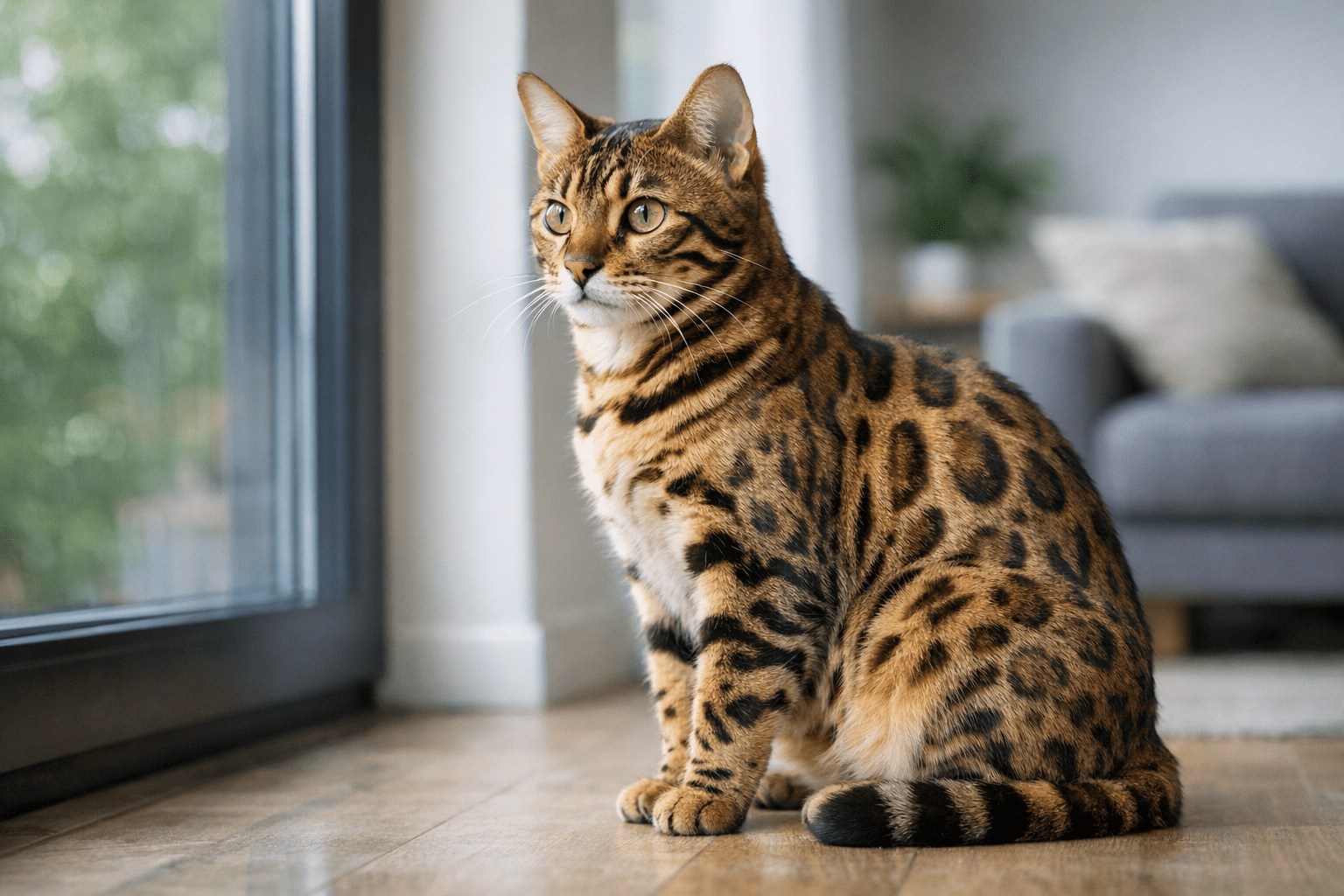
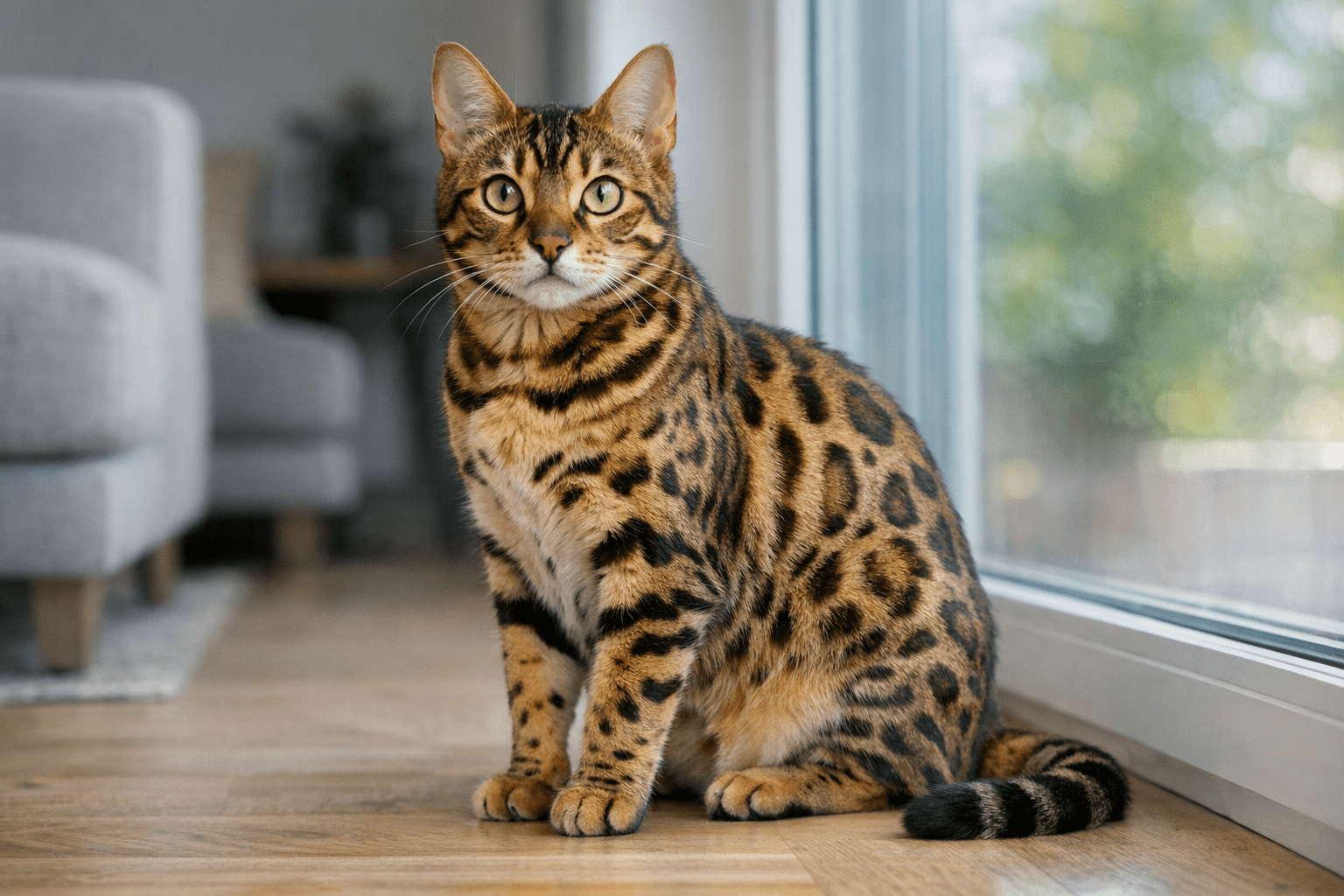
Let’s talk about what makes the Bengal Cat so visually stunning. These cats are, without exaggeration, living works of art. Their muscular, athletic bodies can weigh between 4–7 kg, and they typically reach up to 70 cm in length. With their elongated frames, powerful legs, and relatively small heads adorned with high cheekbones, they truly resemble miniature leopards.
Coat Patterns:
| Pattern | Description | Popularity |
|---|---|---|
| Spotted/Rosetted | Large spots or two-toned rosettes resembling a jaguar’s coat | Extremely popular |
| Marbled | Swirling, flowing patterns unique to each cat | Very popular |
| Sparbled | A mix of spotted and marbled patterns | Less common, not always breed-standard |
The Bengal’s coat colours typically include brown, silver, gold, and snow varieties (seal lynx, seal mink, seal sepia). One of the most sought-after features is the “glitter” effect — a shimmering sheen caused by light refracting off hollow hair shafts. Under sunlight, a glittered Bengal literally sparkles. It’s absolutely mesmerising.
Their eyes are large and almond-shaped, usually green or blue, and are framed by narrow black lines that give them an expressive, almost theatrical appearance. The ears are small with rounded tips but wide bases, and the chin, chest, stomach, and inner legs often display lighter cream or white colouring that contrasts beautifully with the darker back and sides.
I always tell prospective owners: if you want a cat that turns heads at the vet’s waiting room, the Bengal delivers every single time.
Temperament and Personality
Is the Bengal Cat Right for Your Household?
Here’s where honesty is absolutely crucial. The Bengal Cat is not for everyone. These cats are intelligent, playful, affectionate, and incredibly energetic. They’re also demanding, mischievous, and occasionally stubborn. If you’re looking for a quiet lap cat that sleeps 20 hours a day, you might want to consider a Persian instead.
Key Personality Traits:
- Highly Intelligent: Bengals learn quickly and can be trained to perform tricks, respond to commands, and even walk on a harness
- Extremely Playful: They maintain kitten-like energy well into adulthood
- Vocal and Communicative: Expect chirps, trills, and meows — Bengals love to “talk”
- Social and Affectionate: They form strong bonds with their families and crave attention
- Dominant and Confident: They can be territorial and may not tolerate other dominant cats
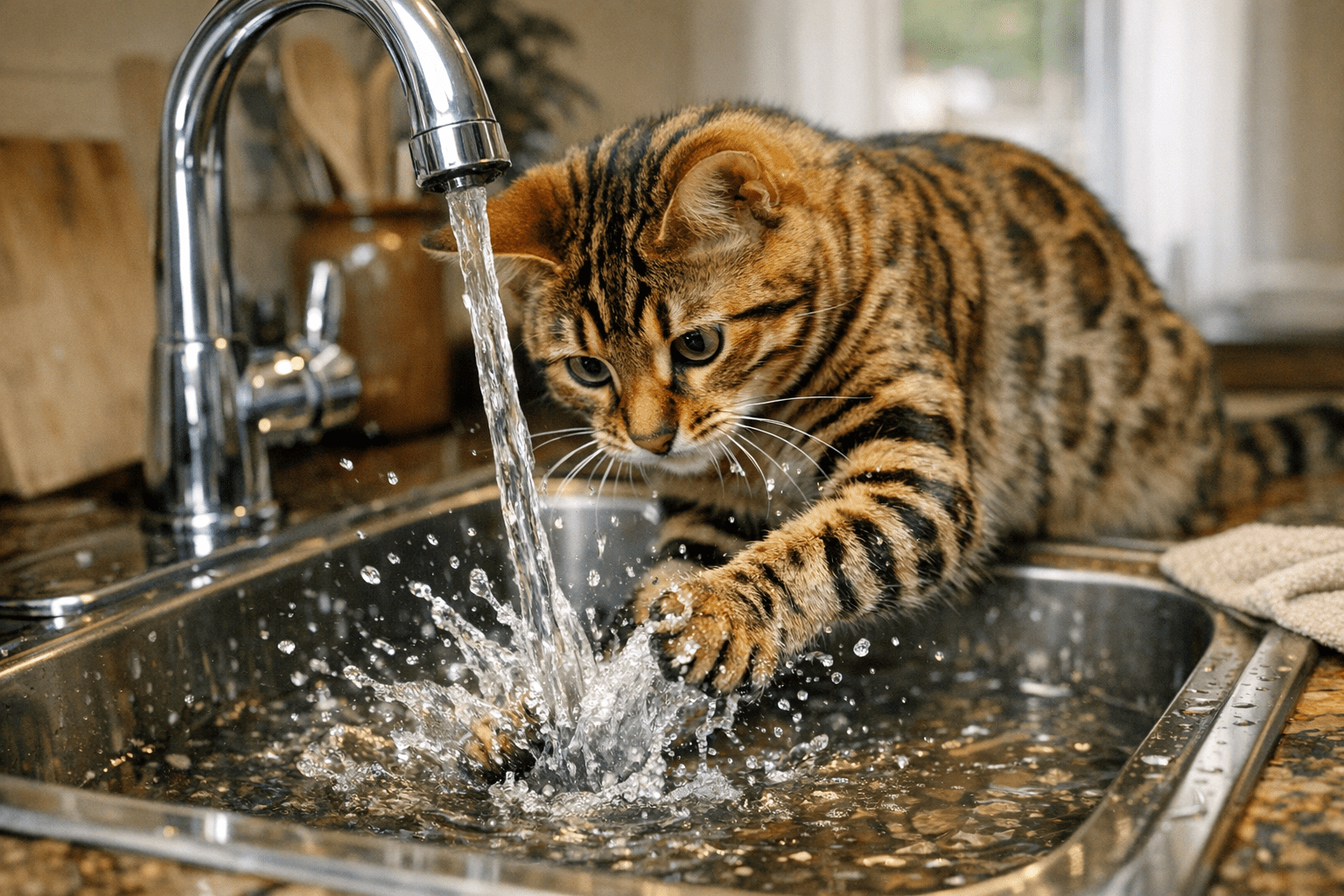
- Water-Lovers: Many Bengals are fascinated by water, a trait inherited from their wild ancestors
From personal experience, I can tell you that Bengals thrive in households where someone is home most of the day. Left alone for extended periods without stimulation, they can become destructive. I’ve heard countless stories from owners who came home to shredded curtains, knocked-over ornaments, and “redecorated” furniture.
However, for the right owner, a Bengal Cat is an absolute joy. Their playful antics, their loyalty, and their sheer enthusiasm for life make every day an adventure.
Diet and Nutrition
Feeding Your Bengal Cat for Optimal Health
Proper feline nutrition is the cornerstone of a healthy, happy cat, and the Bengal is no exception. These active, muscular cats require a diet that’s high in protein and rich in essential nutrients. As obligate carnivores, their bodies are designed to process animal-based proteins, not grains and fillers.
Recommended Diet Options:
| Food Type | Pros | Cons |
|---|---|---|
| Raw Food | Mimics natural diet, high moisture content | Requires careful preparation, risk of bacterial contamination |
| High-Quality Wet Food | Good hydration, convenient | Can be expensive for premium brands |
| Premium Dry Kibble | Convenient, good for dental health | Lower moisture content, often contains more carbohydrates |
Many Bengal owners, myself included, have noticed that these cats can be particularly sensitive to lower-quality commercial foods. Numerous Bengals and their cousins, the Savannah, appear sensitive to industrial cat food and dietary bacteria. If you notice digestive issues, skin problems, or a dull coat, it might be worth evaluating what’s in their bowl.
I once had a Bengal who turned his nose up at everything except raw chicken breast. Getting him to accept a balanced diet was quite the challenge! The lesson? Patience and persistence are key when dealing with picky feline eaters.
Feeding Tips:
- Protein First: Always check that a named meat (chicken, salmon, turkey) is the first ingredient
- Hydration Matters: Bengal cats are prone to urinary issues, so a cat water fountain is a brilliant investment
- Avoid Fillers: Steer clear of foods with excessive grain, corn, or soya content
- Regular Schedule: Feed adult Bengals twice daily; kittens may need three to four smaller meals
If you choose raw food, consult your vet first and ensure the diet is properly balanced with appropriate supplements. A haphazard raw diet can do more harm than good.
Health and Lifespan
Common Health Concerns and Veterinary Care
The Bengal Cat is generally a robust and healthy breed, with an average lifespan of 12–15 years. However, like all pedigree cats, they’re predisposed to certain genetic conditions that responsible owners should be aware of.
Common Health Concerns:
- Progressive Retinal Atrophy (PRA): A genetic condition that can lead to blindness, sometimes within the first year of life. This was identified in Bengals in 2011, and reputable breeders now screen for it
- Hypertrophic Cardiomyopathy (HCM): A heart condition causing thickening of the heart walls. Regular cardiac screening is recommended
- Flat-Chested Kitten Syndrome: A developmental issue that’s usually mild and self-correcting
- Sensitive Digestive Systems: Many Bengals have delicate stomachs, making diet selection particularly important
Preventative Care Checklist:
- Annual veterinary health checks
- Core vaccinations (feline panleukopenia, calicivirus, herpesvirus)
- Regular flea and worming treatments
- Dental check-ups
- Consider pet insurance — vet bills for serious conditions can run into thousands
One piece of advice I always give: don’t skip those annual vet visits. I once delayed a routine check-up for my own cat, and what I thought was a minor issue turned out to be something far more serious. Early detection is genuinely lifesaving.
Grooming and Coat Maintenance
Keeping That Stunning Coat Shining
Here’s some genuinely good news for prospective Bengal owners: grooming is relatively straightforward. The Bengal’s short, dense coat is one of the easiest to maintain among pedigree breeds. That said, “low maintenance” doesn’t mean “no maintenance.”
Grooming Schedule:
| Task | Frequency | Tools Needed |
|---|---|---|
| Brushing | Weekly | Rubber grooming mitt or soft bristle brush |
| Nail Trimming | Every 2–3 weeks | Cat nail clippers |
| Dental Care | Daily (ideal) or weekly | Cat-safe toothpaste and brush |
| Ear Checks | Weekly | Cotton ball and vet-approved cleaner |
| Bathing | Rarely (only if necessary) | Cat-specific shampoo |
The Bengal’s coat naturally produces oils that keep it shiny and healthy. A weekly brush with a rubber grooming mitt helps distribute these oils, removes loose fur, and strengthens your bond. Many Bengals actually enjoy being groomed — it’s a lovely bonding experience.
A word of caution: Bengal cats are known for their love of water, so bath time might not be the nightmare it is with other breeds. However, I’d still recommend introducing water gradually. My friend’s Bengal leapt into a running bath uninvited, sending water cascading across the bathroom floor. Hilarious in hindsight, but not ideal at the time! 😺
Dental care is often overlooked by cat owners, but it’s vital. Dental disease affects a significant percentage of cats over three years old. Starting a tooth-brushing routine early will save you (and your cat) a lot of trouble down the road.
Training and Enrichment
Keeping Your Bengal Cat Mentally Stimulated
If there’s one area where the Bengal Cat truly excels, it’s their trainability and need for mental stimulation. These cats have brains that are constantly whirring, and without proper outlets, they’ll find their own entertainment — usually at your expense.
Enrichment Essentials:
- Clicker Training: Bengals respond exceptionally well to positive reinforcement. Teaching them to sit, high-five, or come when called is not only possible but genuinely enjoyable
- Puzzle Feeders: Turn mealtimes into mental workouts. Puzzle feeders encourage natural hunting behaviours and slow down fast eaters
- Interactive Toys: Wand toys, feather teasers, and battery-operated mice that mimic prey movements
- Vertical Space: Cat trees, wall-mounted shelves, and perches are absolutely essential. Bengals love to climb and survey their territory from above
- Water Play: Given their love of water, a shallow splash pool or running tap can provide hours of entertainment
- Agility Training: Yes, you can actually train a Bengal to navigate an obstacle course. It’s brilliant exercise and mental stimulation combined
I learned the importance of enrichment the hard way when my friend’s Bengal figured out how to open the kitchen cupboards. We came home to find cat biscuits scattered across the floor and one very satisfied-looking feline sitting amidst the chaos. Child-proof locks became a permanent fixture after that incident.
The golden rule with Bengal cats is simple: a tired Bengal is a happy Bengal. Invest time in play and training, and you’ll be rewarded with a well-adjusted, contented companion.
Indoor vs Outdoor Living
Creating the Perfect Environment
The indoor versus outdoor debate is particularly relevant for Bengal Cat owners. Given their wild ancestry and high energy levels, Bengals naturally crave space to explore, climb, and hunt. However, letting them roam freely comes with significant risks, including traffic, disease, theft, and encounters with other animals.
The Case for Secure Outdoor Access:
| Option | Pros | Cons |
|---|---|---|
| Cat-Proof Garden Fencing | Freedom to roam safely within garden boundaries | Expensive to install, requires maintenance |
| Catio (Enclosed Outdoor Space) | Safe exposure to fresh air and nature | Requires space and initial investment |
| Secured Balcony | Suitable for flat dwellers | Limited space, must be thoroughly secured |
| Harness Training | Allows supervised outdoor exploration | Not all cats tolerate harnesses |
If outdoor access isn’t feasible, you must compensate with a rich, stimulating indoor environment. This means ample vertical space, interactive play sessions, and rotating toys regularly to prevent boredom. A Bengal confined to a small flat without enrichment will quickly become stressed and potentially destructive.
Indoor Cat Essentials:
- Multiple cat trees and scratching posts
- Window perches for bird-watching
- Interactive toys and puzzle feeders
- Regular play sessions (at least 30 minutes twice daily)
- Hiding spots and cosy beds
I always advise UK owners that a secure garden or catio is the ideal compromise. It allows your Bengal to satisfy their natural instincts while keeping them safe. Many UK homeowners have found creative solutions, from DIY catios built from timber and mesh to professionally installed cat-proof fencing systems.
Litter Training and Hygiene
Practical Tips for a Clean Home
Good news: Bengal cats are generally fastidious about their litter habits, and litter training is usually straightforward. However, there are a few things worth knowing to ensure everything runs smoothly.
Litter Training Tips:
- Start Early: Kittens learn best between 3–5 weeks of age. Most Bengal kittens will already have basic litter habits by the time they come home at 12–13 weeks
- Choose the Right Litter: Unscented, clumping litter is generally preferred by cats. Avoid strongly scented varieties, as these can put cats off using the tray
- Location Matters: Place litter trays in quiet, accessible areas away from food and water bowls
- The N+1 Rule: The general guideline is one litter tray per cat, plus one extra. So, two Bengals need three trays
- Keep It Clean: Scoop daily and change the litter completely at least once a week
Common Litter Training Issues:
- Avoiding the Tray: Could indicate a dirty tray, wrong location, or a medical issue
- Spraying: More common in unneutered males. Neutering usually resolves this
- Going Outside the Tray: Rule out urinary infections first, then consider stress or territorial issues
I remember bringing home my first kitten and confidently setting up a single litter tray in the corner of the kitchen. Within a week, I’d learned the hard way that the kitchen, next to the noisy dishwasher, was a terrible location. Moving the tray to a quiet hallway solved the problem overnight.
Pros and Cons of Bengal Cat Ownership
An Honest Assessment
Before committing to a Bengal Cat, it’s essential to weigh up both sides. Here’s my honest assessment based on years of experience and countless conversations with Bengal owners across the UK.
Pros:
- ✅ Stunningly beautiful with a unique, wild appearance
- ✅ Highly intelligent and trainable
- ✅ Playful, entertaining, and full of personality
- ✅ Affectionate and loyal to their families
- ✅ Low-maintenance grooming requirements
- ✅ Often enjoy water, making bath time easier
- ✅ Generally healthy with a good lifespan (12–15 years)
Cons:
- ❌ Extremely high energy and demanding of attention
- ❌ Can become destructive if bored or under-stimulated
- ❌ Not suitable for very busy households or sedentary owners
- ❌ Prone to certain genetic health conditions
- ❌ Can be expensive to purchase (£1,000–£1,500 from reputable breeders)
- ❌ May not get along with other dominant cats
- ❌ Requires more enrichment than the average domestic cat
The bottom line? If you have the time, energy, and resources to devote to a Bengal Cat, you’ll be rewarded with one of the most engaging, entertaining, and loving companions imaginable. If not, there are plenty of other wonderful breeds that might better suit your lifestyle.
Bengal Cat vs Other Popular Breeds
How Does the Bengal Compare?
It’s helpful to see how the Bengal stacks up against other popular breeds in the UK. Here’s a quick comparison:
| Feature | Bengal Cat | Maine Coon | Abyssinian | Siamese |
|---|---|---|---|---|
| Size | Medium (4–7 kg) | Large (5–11 kg) | Medium (3–5 kg) | Medium (3–5 kg) |
| Energy Level | Very High | Moderate–High | High | High |
| Grooming | Low | High | Low | Low |
| Intelligence | Very High | High | Very High | High |
| Vocalisation | Moderate | Low–Moderate | Low | Very High |
| Lifespan | 12–15 years | 12–15 years | 12–15 years | 12–20 years |
| Good with Children | Yes (with supervision) | Excellent | Good | Good |
| Suitable for Flats | With enrichment | With space | Yes | Yes |
The Bengal stands out for its combination of wild appearance, high intelligence, and energetic personality. Compared to the Maine Coon, Bengals are more active but require less grooming. Against the Abyssinian, they’re similarly playful but larger and more vocal. The Siamese may talk more, but the Bengal’s athleticism and love of water set it apart.
Finding a Reputable Breeder in the UK
What to Look For and Red Flags to Avoid
If you’ve decided that a Bengal Cat is right for you, finding a reputable breeder is absolutely critical. Unfortunately, the breed’s popularity has attracted some unscrupulous individuals more interested in profit than animal welfare.
Green Flags:
- ✅ Registered with GCCF, TICA, or another recognised governing body
- ✅ Happy to show you the kittens with their mother
- ✅ Provides health screening certificates (PRA, HCM)
- ✅ Offers a contract, pedigree papers, and aftercare support
- ✅ Asks you questions about your home and lifestyle
- ✅ Kittens are well-socialised and confident
- ✅ Willing to stay in touch after the sale
Red Flags:
- ❌ “Pedigree cats without documentation”
- ❌ Multiple breeds available at all times (kitten farm warning)
- ❌ Unwilling to let you visit the breeding environment
- ❌ Kittens available before 12–13 weeks of age
- ❌ No health screening or vaccination records
- ❌ Pressuring you to buy quickly
Expect to pay between £1,000–£1,500 for a pet-quality kitten, with breeding-quality cats costing more. This might seem steep, but it reflects the breeder’s investment in health screening, proper nutrition, socialisation, and veterinary care.
A good breeder will also have conditions for sale, such as requiring neutering for pet cats or ensuring adequate housing with outdoor access. Don’t be offended — they’re simply ensuring their kittens go to the best possible homes.
Frequently Asked Questions
Are Bengal Cats legal to own in the UK?
Yes, Bengal Cats are completely legal to own in the UK. However, earlier generations (F1–F4) may have been subject to the Dangerous Wild Animals Act 1976, requiring a special licence. For pet-quality Bengals from the fifth generation onwards (F5+), no licence is required. Always check with your local council if you’re unsure about your cat’s generation.
How much does a Bengal Cat cost in the UK?
The price varies depending on the breeder, lineage, and coat quality. Generally, you can expect to pay between £1,000 and £1,500 for a pet-quality kitten from a reputable breeder. Show-quality or breeding-quality cats can cost significantly more. Be wary of prices that seem too good to be true — they usually are.
Do Bengal Cats get along with dogs?
Many Bengal Cats can coexist happily with dogs, especially if introduced properly from a young age. Their confident, playful nature means they often enjoy the company of cat-friendly dogs. However, introductions should always be gradual and supervised. Each animal’s individual temperament plays a significant role in the outcome.
Are Bengal Cats hypoallergenic?
No cat breed is truly hypoallergenic, and the Bengal is no exception. However, some allergy sufferers report fewer reactions to Bengals compared to other breeds, possibly due to their short, low-shedding coat. If you have allergies, spend time with Bengals before committing to ownership.
How much exercise does a Bengal Cat need?
Bengal Cats require significantly more exercise and mental stimulation than the average domestic cat. Aim for at least 30 minutes of interactive play twice daily, supplemented with puzzle feeders, climbing structures, and environmental enrichment. A bored Bengal is a destructive Bengal.
Can Bengal Cats be left alone during the day?
While no cat should be left alone for excessively long periods, Bengals are particularly social and can struggle with extended solitude. If you work full-time, consider providing a companion cat (a calm breed like a British Shorthair works well), ample enrichment, and interactive toys. Some owners also use pet cameras to monitor and interact with their cats remotely.
Conclusion
Is the Bengal Cat Your Perfect Match?
The Bengal Cat is, without doubt, one of the most extraordinary breeds you can welcome into your home. Their stunning appearance, boundless energy, sharp intelligence, and affectionate nature make them truly special companions. However, they’re not the right fit for everyone.
Key Takeaways:
- Bengals require significantly more time, attention, and enrichment than most domestic cats
- Their diet should be high in protein, and many thrive on premium wet or raw food
- Regular veterinary care and awareness of genetic health conditions are essential
- Secure outdoor access or a richly stimulating indoor environment is crucial
- Finding a reputable breeder is non-negotiable — avoid “bargain” kittens without documentation
If you’re prepared to invest the time and energy, the rewards are immeasurable. A Bengal Cat will fill your home with laughter, love, and just a touch of beautiful chaos. They’re not just pets; they’re personalities, companions, and occasionally, tiny household tornadoes. 😺
Ultimately, the decision to bring any cat into your life should be made with careful thought and honest self-assessment. I hope this guide has given you the clarity and confidence to make the right choice for you and your family. Good luck on your feline journey — it’s going to be a wild one.