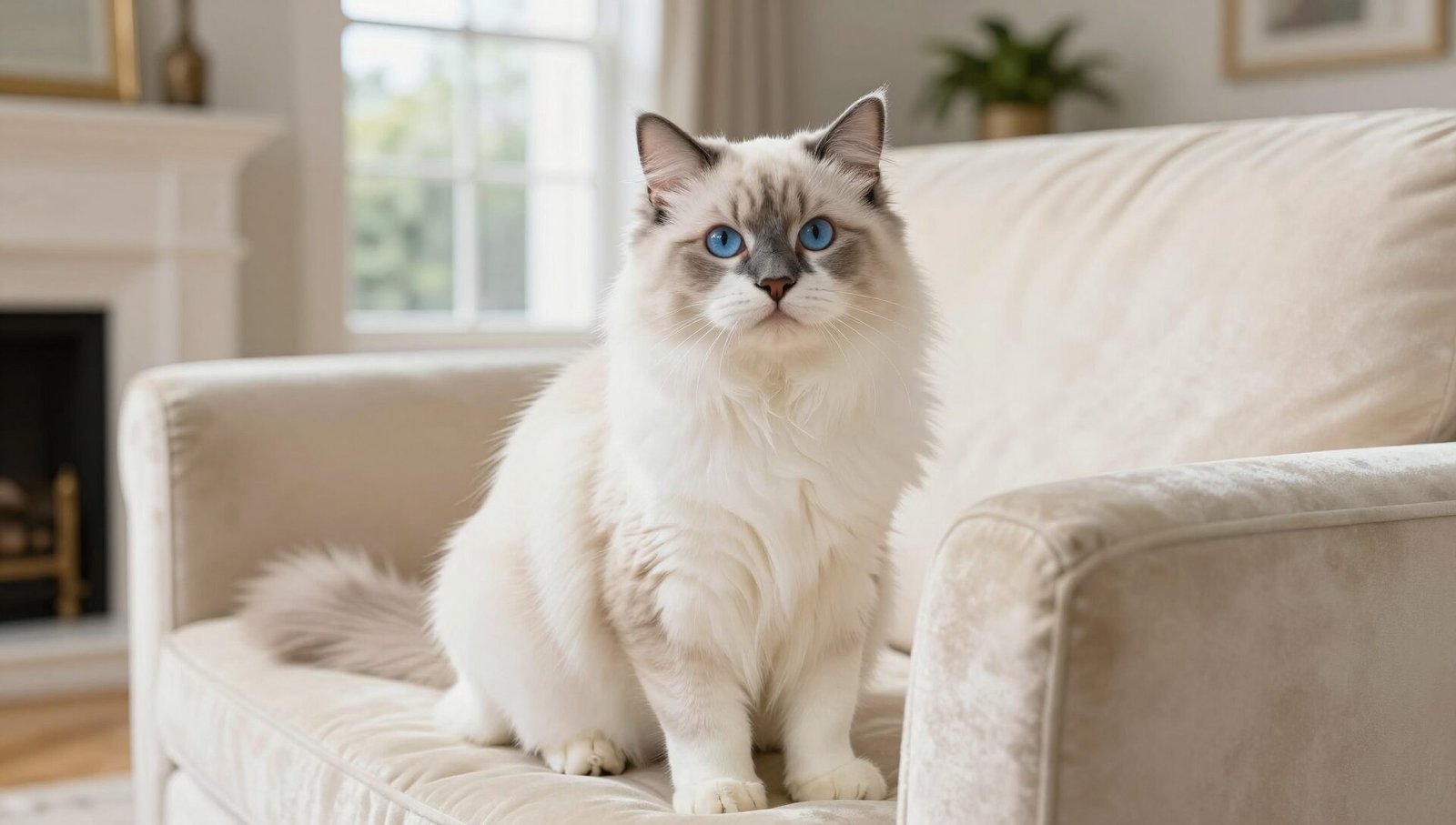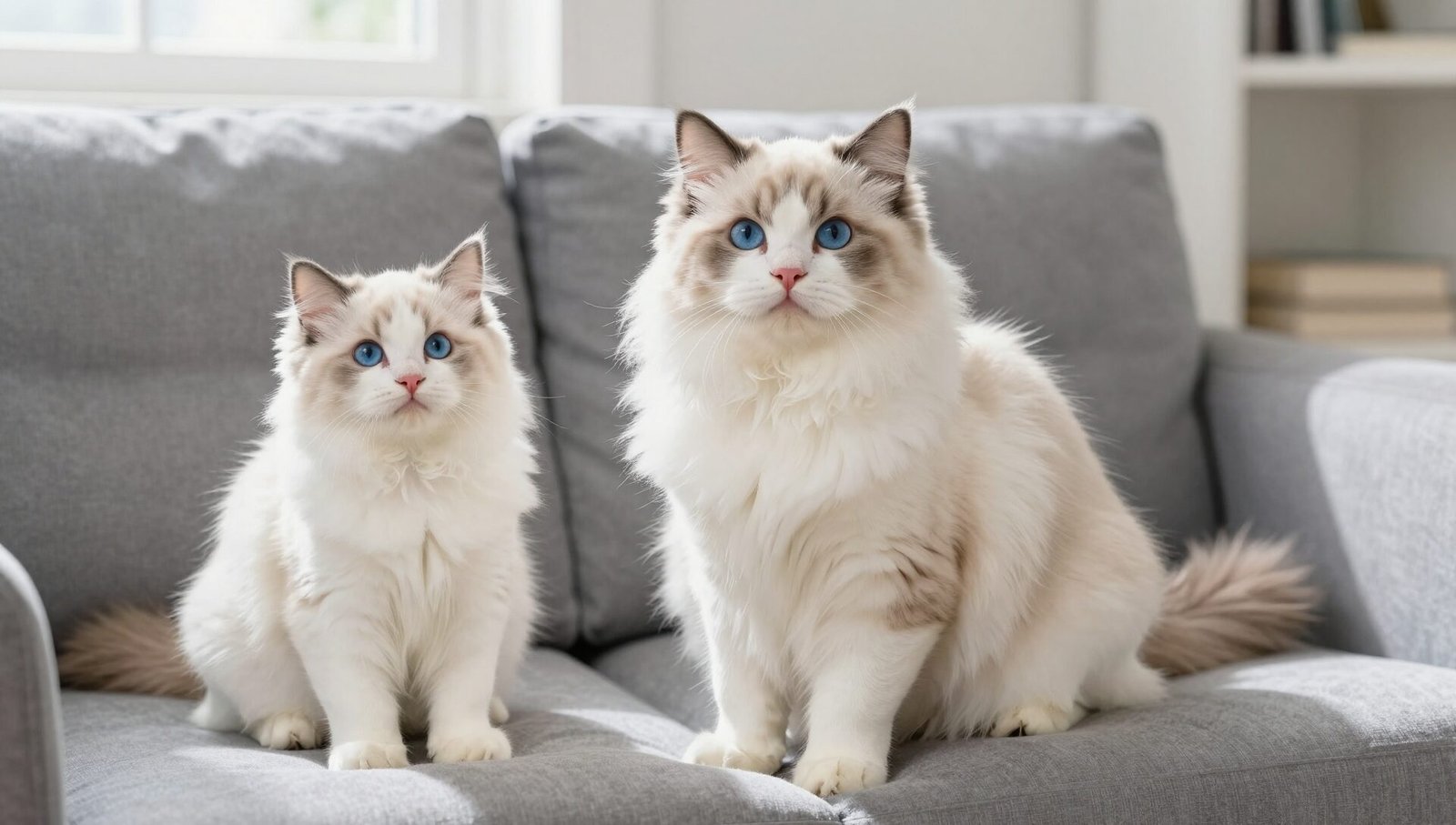
If you’re the proud parent of a Ragdoll kitten—or you’re about to become one—you’ve likely wondered, when do Ragdoll cats stop growing? It’s one of the most common questions I hear, and having raised two of these magnificent blue-eyed beauties myself, I can tell you that the journey from tiny kitten to gentle giant is nothing short of remarkable. Unlike the average moggie who hits full size around their first birthday, Ragdolls are the “late bloomers” of the feline world.
Many first-time owners panic when their cat is still filling out at two or three years old, wondering if they have accidentally adopted a lynx! Rest assured, this extended growth period is perfectly normal. It’s actually one of the breed’s defining characteristics, setting them apart from other domestic cats.
In this comprehensive guide, we’ll walk you through the entire Ragdoll growth timeline, from their delicate first weeks to their fully mature stature at around four years old. We’ll cover the weight milestones you can expect, the crucial role nutrition plays in their development, and how to manage the health and behavioural changes along the way. Whether you’re tracking your kitten’s progress or just curious about the breed, stick with me to get the full story on when your Ragdoll will finally reach their full potential.
Ragdoll Cat Breed Overview
Origins and Distinctive Traits
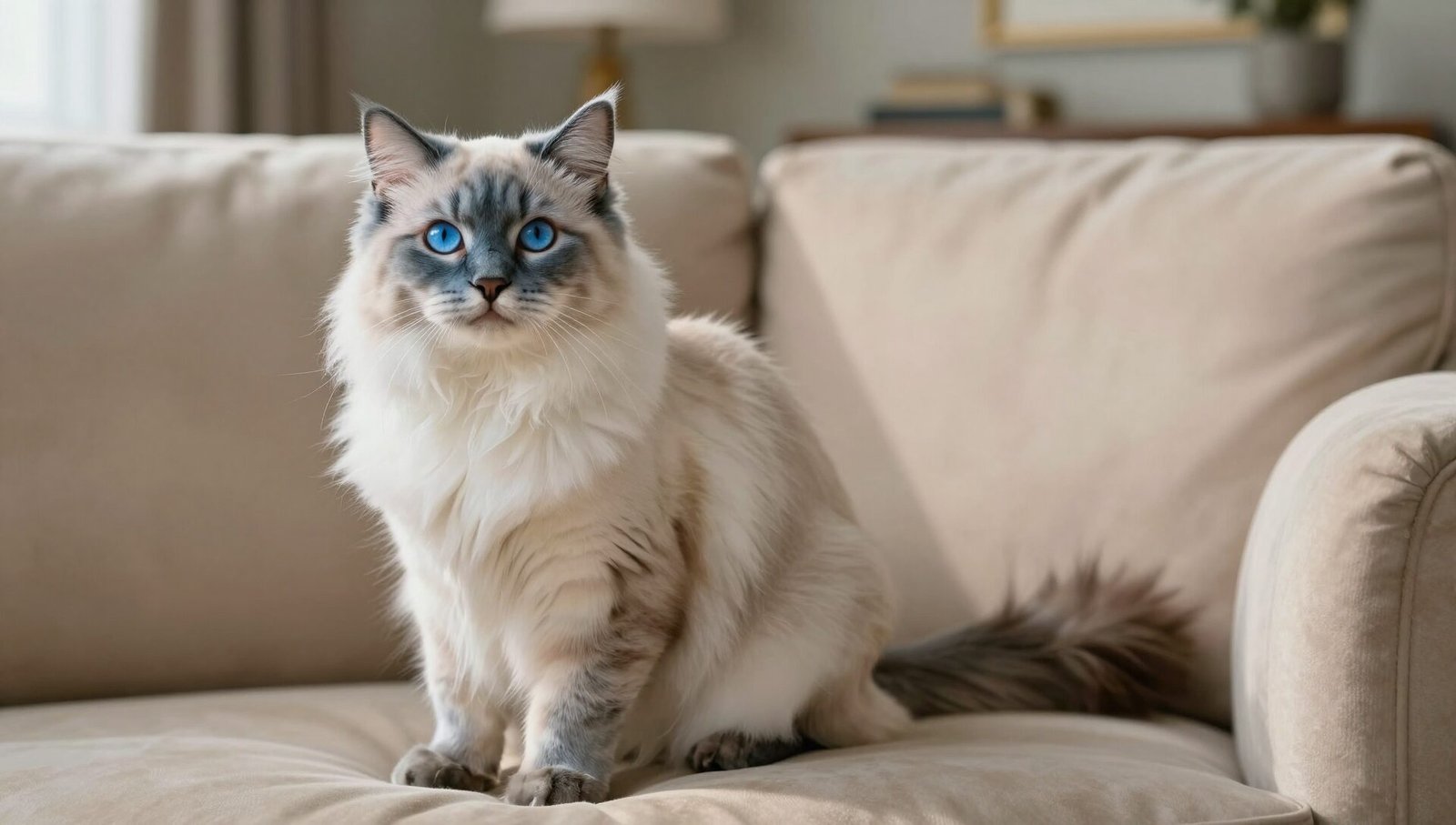
The Ragdoll is a truly special breed, originating in California during the 1960s. They are perhaps best known for their striking blue eyes and semi-long, silky coat. But what really sets them apart is their temperament. I often describe them to friends as “puppy-cats”—they tend to greet you at the door, follow you from room to room, and many even enjoy a game of fetch.
Physically, they are one of the largest domesticated cat breeds. Males can be absolute units, often dwarfing their female counterparts. Their coats are colour-pointed, meaning their ears, face, paws, and tail are darker than their bodies, much like a Siamese but with that signature fluffiness.
Because they are slow growers, their personalities develop alongside their bodies. You get to enjoy the “kitten phase” for much longer than usual, though this also means the “teenage” phase (with all its potential for mischief) lasts longer too! Their docile nature makes them fantastic family pets, but their size does require a bit of extra planning around the home.
The Ragdoll Growth Timeline
Patience is a Virtue with Ragdolls
So, when do Ragdoll cats stop growing? The short answer is around 4 years old. The long answer is a bit more complex, involving distinct phases where they might grow out (length) rather than up (height), or bulk up with muscle mass.
Most domestic cats reach their full size by 12 months. Ragdolls, however, are just getting started at that age. They hit “adolescence” around one year, where they are sexually mature and technically adults, but their skeletal structure and muscle mass continue to develop significantly for another 2-3 years.
Here is a general breakdown of their growth trajectory:
- 0-6 Months: Rapid growth. They start around 100g at birth and will hit roughly 2.5kg by six months.
- 6-12 Months: Growth slows slightly but is still consistent. They will reach about 3.6kg (male) or 2.7kg (female) by their first birthday.
- 1-2 Years: The “filling out” stage begins. Bones finish growing, and muscle mass increases. This is often when owners notice their cat getting significantly broader in the chest.
- 3-4 Years: Final maturation. The coat reaches its full glory, and the body reaches its maximum weight and size.
Weight Chart: Ragdoll Growth Milestones
To give you a clearer picture, here is the expected weight progression for Ragdolls:
| Age | Male Weight | Female Weight |
|---|---|---|
| Birth | 80-120g | 80-120g |
| 6 Weeks | 400g | 400g |
| 3 Months | 1.4kg | 1.4kg |
| 6 Months | 2.7kg | 2.5kg |
| 12 Months | 3.6kg | 2.7kg |
| 24 Months | 6.8kg | 5.1kg |
| 36 Months | 8.2kg | 6.1kg |
| 48 Months | 9.1kg | 6.8kg |
Note: These are averages. My male Ragdoll, Oliver, was a bit of a runt initially but caught up by year three!
The Growth Phases Explained
From Tiny Kittens to Gentle Giants
Understanding the phases helps you know what to look out for.
The Kitten Phase (0-12 Months) During this time, growth is exponential. You’ll need to switch from kitten milk to wet kitten food, and eventually to a high-protein diet suitable for their age. Their personalities shine through here; you’ll see the classic Ragdoll “flop” where they go limp when picked up, though some kittens are more wriggly than others.
The Junior Phase (1-3 Years) This is where the question “when do Ragdoll cats stop growing?” gets tricky. They are legally adults, so many owners switch to adult food. However, because they are still growing, high-quality nutrition is still vital. You’ll notice their chest deepening and their overall silhouette becoming more robust.
The Young Adult Phase (3-4 Years) Growth becomes very subtle now. It’s mostly about muscle tone and the final development of their lush coat. By 4, they are the finished article.
Factors Influencing Ragdoll Growth
Nature vs Nurture
While genetics play the biggest role, several factors can influence how big your Ragdoll gets and when they stop growing.
- Genetics: If the parents were large, the kitten likely will be too. Always ask a breeder about the lineage if size is a concern.
- Diet: This is huge. A poor diet can stunt growth or, conversely, lead to premature obesity which masks healthy muscle development.
- Neutering: Neutering can sometimes lead to a slightly larger size due to hormonal changes affecting the growth plates, though the difference is usually negligible in terms of overall height.
- Sex: Males are almost always significantly larger than females.
Nutrition for Optimal Growth
You Are What You Eat
Feeding a Ragdoll correctly is essential. Because they are obligate carnivores, they need high levels of animal protein to build those strong muscles.
Protein is King Look for foods where meat is the first ingredient. The protein source matters immensely. Vegetable protein has a lower biological value for cats, meaning they can’t use it as efficiently. Aim for a diet with at least 30-40% protein content (on a dry matter basis).
The Wet vs Dry Debate I’m a big fan of wet food for hydration, but a mix is often practical.
- Wet Food: Great for hydration and mimics their natural diet. Essential for urinary tract health.
- Dry Food: Good for dental health (though less so than people think) and convenient for grazing.
Feeding Schedule Kittens need to eat more frequently (3-4 times a day). As they grow, you can reduce this to twice daily. Be careful not to free-feed dry food too much; Ragdolls love their food and can easily become tubby if not monitored.
Health and Wellness During Growth
Keeping an Eye on the Health
Large breeds can be prone to certain genetic conditions. Regular vet check-ups are non-negotiable.
- Hypertrophic Cardiomyopathy (HCM): This is a heart condition common in Ragdolls. Regular screenings are recommended.
- Polycystic Kidney Disease (PKD): Another hereditary condition to be aware of.
- Joint Issues: Because they are heavy, ensure they have plenty of soft bedding and avoid encouraging them to jump from excessive heights while their joints are still developing.
Vet Visits Expect trips every few weeks for vaccinations in the first year, then annually. During these visits, ask your vet if the growth trajectory looks healthy. A healthy Ragdoll should feel muscular, not bony, and certainly not have a hanging belly (though a primordial pouch is normal and quite common!).
Comparing Ragdolls to Other Large Breeds
The Gentle Giants Club
Ragdolls aren’t the only big cats out there. Here’s how they stack up against the other “heavyweights”:
| Breed | Adult Male Weight | Full Maturity Age | Coat Type |
|---|---|---|---|
| Ragdoll | 6-9 kg | 4 Years | Semi-long, silky |
| Maine Coon | 8-12 kg | 3-5 Years | Long, shaggy |
| Norwegian Forest | 6-9 kg | 5 Years | Long, double coat |
| Siberian | 6-9 kg | 5 Years | Long, triple coat |
While the Maine Coon is often considered the largest by sheer mass, Ragdolls are definitely in the top tier. They share the slow growth trait with these other breeds, which is a genetic characteristic of “gentle giants.”
Grooming Needs of a Growing Ragdoll
Fur Maintenance
A common misconception is that Ragdolls are high-maintenance because of their fur. Actually, they lack a dense undercoat, which means they are much less prone to matting than Persians or Maine Coons.
However, they do shed, especially when the seasons change. Regular brushing (2-3 times a week) is sufficient for most of the year, but daily brushing during shedding season will save your sofa. It’s also a great bonding experience. My Oliver actually demands his brushing sessions now; if I forget, he sits next to the drawer where the brush is kept and stares at me until I get the message.
Indoor vs Outdoor Living
Safe Spaces for Big Cats
Ragdolls are often described as “indoor cats.” They lack the strong street smarts of a Bengal or a British Shorthair and can be trusting to a fault, making them vulnerable to theft or traffic.
If you keep them indoors (which I recommend), you need to ensure they have enough stimulation.
- Cat Trees: They love to climb, but ensure the tree is sturdy enough for a 9kg cat!
- Litter Trays: Get the biggest ones you can find. Standard trays are often too small for a fully grown male Ragdoll.
- Enclosures: A “catio” is a fantastic compromise, giving them fresh air without the risks.
Behavioural Changes During Growth
The Teenage Phase
Just when you think they’ve settled down, the 6-month to 2-year mark can bring some “teenage” rebellion. You might see:
- Testing Boundaries: Ignoring commands they used to follow.
- Energy Spurts: Zoomies at 3 AM are not exclusive to kittens!
- Scratching: They need appropriate outlets. A bored Ragdoll is a destructive Ragdoll.
This is the prime time for enrichment. Puzzle feeders, interactive toys, and regular play sessions are essential to keep their minds sharp and their bodies active.
When to Switch from Kitten to Adult Food
The 12-Month Myth
Many owners switch to adult food strictly at 12 months. For most cats, this is fine. For Ragdolls, it’s debatable.
Since they continue growing until 4 years, some vets recommend staying on a high-quality kitten food, or a specific “junior” food, until they are 2 years old. The higher calorie and protein content supports their extended growth phase. However, you must monitor their weight closely. If they start getting chubby, reduce the portion size or switch to an adult food with high protein but lower fat.
Signs they are ready for adult food:
- Their growth rate has visibly slowed.
- They are maintaining a healthy weight without gaining excess fat.
- Your vet gives the green light.
Pros and Cons of Owning a Ragdoll
The Reality Check
Pros:
- Temperament: Incredibly docile, affectionate, and dog-like.
- Looks: Those blue eyes and that soft coat are show-stoppers.
- Adaptability: Great for families, singles, and seniors.
- Quiet: They have a soft, musical meow.
Cons:
- Cost: They are expensive to buy and can have higher food bills due to their size.
- Health Risks: Prone to HCM and PKD, meaning potential vet bills.
- Grooming: While not extreme, they do require regular brushing.
- Size: You need larger equipment (trays, carriers, trees).
Conclusion
The Long Game is Worth It
To answer the central question: when do Ragdoll cats stop growing? You’re looking at a timeline of 3 to 4 years for full maturity. It requires patience, a good understanding of their nutritional needs, and a commitment to their long-term health.
Watching a Ragdoll mature is one of the great joys of ownership. You get to see that tiny, squeaking kitten transform into a majestic, lion-like companion. While the wait is long, the result is a stunning, loving cat that will be a loyal member of your family for years to come. Just be sure to invest in a sturdy cat tree and a good vacuum cleaner—you’re going to need them!
FAQs
How big do Ragdoll cats get?
Ragdolls are one of the largest domestic cat breeds. Adult males typically weigh between 6.8 and 9.1 kilograms, while females are slightly smaller, usually ranging from 4.5 to 6.8 kilograms. Some exceptional males can exceed 10 kilograms, but this is less common and should be monitored to ensure it’s muscle, not fat.
Why is my Ragdoll still small at one year old?
Don’t panic! Ragdolls are slow developers. At one year old, they are barely past their “teenage” phase. Most Ragdolls are only about two-thirds of their final weight at their first birthday. As long as your kitten is healthy, active, and eating well, they will likely continue to grow and fill out for another two to three years.
When do Ragdoll cats stop growing compared to normal cats?
A standard domestic shorthair usually reaches full physical maturity between 1 and 2 years of age. In contrast, Ragdolls often continue growing until they are 3 to 4 years old. This extended growth period is common in larger cat breeds and is a key characteristic of the Ragdoll breed.
Do male Ragdolls grow larger than female Ragdolls?
Yes, there is a significant size difference between the sexes. Male Ragdolls are generally much larger and heavier than females. It is quite common for a fully grown male to be nearly twice the weight of a female, with broader heads and more muscular bodies.
Should I feed my Ragdoll kitten food for longer than one year?
Many breeders and vets recommend feeding Ragdolls kitten or junior food until they are around 2 years old. Because they continue to develop muscle and bone mass well into their second and third years, the higher calorie and protein content of kitten food can support their growth. However, always monitor their weight to prevent obesity.
Are Ragdolls indoor cats?
While Ragdolls can go outdoors, they are often recommended as indoor cats. They are very docile and trusting, which makes them poor at defending themselves against threats like traffic, other animals, or theft. Providing a stimulating indoor environment with cat trees, scratching posts, and puzzle toys, or an enclosed “catio,” is the safest way to keep them happy.