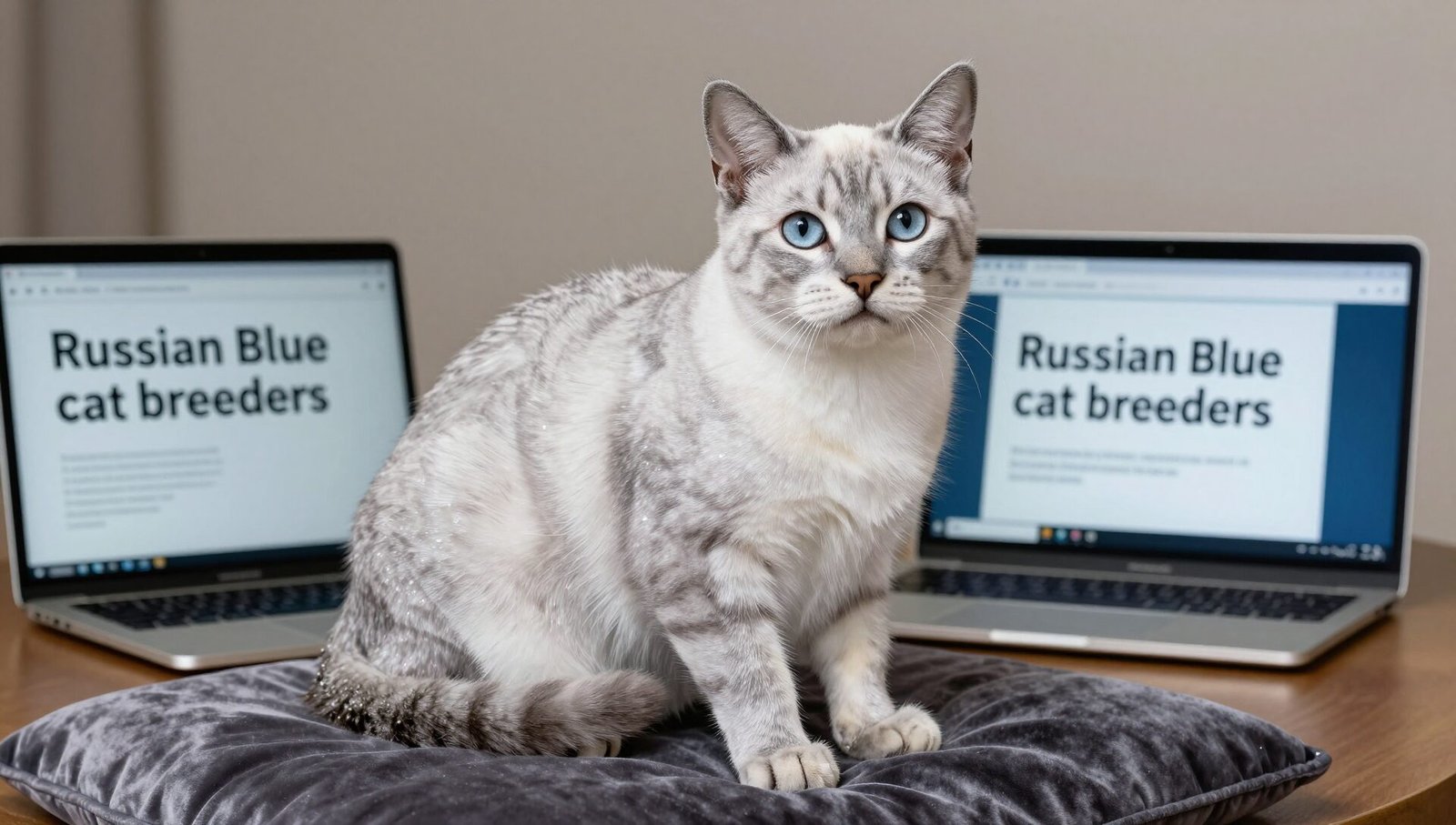
Have you ever locked eyes with a cat that looks like it’s judging your life choices but in a sophisticated, silver-coated way? Welcome to the world of the Russian Blue. If you’re currently on the hunt for Russian Blue cat breeders, you’re likely looking for a feline companion that combines stunning beauty with a brain the size of a walnut (but much sharper).
Finding a reputable breeder is the first and most critical step in your journey. It’s not just about buying a kitten; it’s about investing in a healthy, well-socialised family member. As someone who has navigated the murky waters of the cat fancy world, I can tell you that doing your homework on Russian Blue cat breeders is the difference between a dream pet and a nightmare scenario.
In this guide, we will walk through everything you need to know, from the breed’s royal history to the nitty-gritty of litter training and the dreaded “scammer” websites.
The Allure of the Russian Blue
Before you start emailing breeders, it helps to know exactly what you’re getting into. The Russian Blue is not just a pretty face; they are a breed with a fascinating history and distinct characteristics. Legend has it they originated in the port of Arkhangelsk (Archangel) in Russia, hence their nickname “Archangel Blues.” They were treasured by Russian Czars and eventually made their way to Europe, charming everyone they met.
Physically, they are the supermodels of the cat world. They possess a short, dense, double coat that stands up from the body, sparkling with silver tips. Their eyes are a vivid, striking green—a feature that breeders spend years perfecting. However, looks aren’t everything. These cats are known for their “smile,” a slightly upturned mouth that gives them a permanent expression of Mona Lisa-like mystery.
But don’t let the elegance fool you. These cats are incredibly intelligent and sensitive. They can open doors, manipulate latches, and are known to be quite shy around strangers. If you’re looking for a lap cat that will bond deeply with you and even play a game of fetch, the Russian Blue is a fantastic choice. They are creatures of habit, so if you’re the type who rearranges the living room every month, be prepared for a very judgmental cat.
Why Choose Russian Blue Cat Breeders?
You might wonder why you can’t just pick up a kitten from Gumtree or a local classified ad. While I understand the temptation—especially when you see a cute face—buying from registered Russian Blue cat breeders offers peace of mind that is worth every penny.
Reputable breeders are the guardians of the breed standard. Their goal isn’t to make a quick buck; it’s to improve the breed’s health, temperament, and appearance. When you buy from a GCCF (Governing Council of the Cat Fancy) registered breeder, you are getting a kitten that has been raised in a home environment, properly socialised, and given the best start in life.
One of the biggest advantages is health testing. Responsible breeders test for genetic issues specific to the breed. In the Russian Blue world, we look out for Polycystic Kidney Disease (PKD) and other hereditary conditions. A good breeder will provide a pedigree, vaccination records, and often a contract that includes a return policy if your circumstances change. They want their kittens back rather than seeing them end up in a shelter.
Furthermore, these breeders are a fountain of knowledge. They can tell you exactly what to feed your kitten, how to handle the first few nights, and what to expect as the cat matures. It’s like having a mentor for your first few years of cat ownership. Don’t be surprised if they interview you extensively—they are protective parents!
Pedigree vs. Pet Quality
When talking to breeders, you’ll hear terms like “Show Quality” and “Pet Quality.” Don’t let the word “pet” fool you; it doesn’t mean there is anything wrong with the cat. It simply means the kitten might have a minor flaw according to the strict breed standard (perhaps a small white spot on the chest or a slight off-colour nose pad) that would prevent it from winning rosettes at a show.
These “pet quality” kittens are often the best companions. They usually come with a contract requiring them to be neutered or spayed. They are priced lower than their show-quality siblings but possess all the charm and health of a pedigree Russian Blue. If you aren’t planning to show your cat or breed, this is the route I recommend.
Locating Reputable Breeders in the UK
Finding the right breeder requires patience. The best place to start in the UK is the Russian Blue Breeders’ Association (RBBA). As mentioned in the source material, the RBBA is affiliated with the GCCF and International Cat Care. They maintain a list of breeders who adhere to a code of ethics.
You can also attend a GCCF cat show. This is a brilliant day out and a great way to meet breeders in person. You can see the cats up close, check their temperament, and have a chat. Nothing beats seeing the environment the cats come from.
Here is a checklist for finding your breeder:
- Check Registration: Ensure they are GCCF registered.
- Health Guarantees: Ask specifically about FIV/FeLV testing and genetic screening.
- Visit the Home: A reputable breeder will welcome you (once kittens are old enough) to see the parents and the living conditions.
- Waitlists: Be prepared to wait. Good breeders often have waitlists of 6 to 12 months. If they have kittens available immediately with no waiting list, proceed with caution.
The Adoption Process
Once you’ve found a breeder you trust, the process usually begins with a phone call or email. Be prepared to answer questions about your home, work schedule, and previous pet experience. This isn’t an interrogation; it’s a welfare check.
After you’re approved, you’ll usually place a deposit to reserve a kitten. Costs for a Russian Blue kitten in the UK can range from £500 to £1,000+, depending on the pedigree and whether it is show or pet quality.
Around 13 weeks of age, your kitten will be ready to leave. They should arrive fully vaccinated, microchipped, wormed, and litter trained. This is the moment when all the waiting pays off. However, the first few days at home can be a shock to the system for the kitten. They are sensitive souls and may hide under the sofa for a day or two. Patience is key here.
Essential Care for Your New Kitten
Bringing a kitten home is like having a toddler who can climb the curtains. Here’s how to manage the basics.
Feline Nutrition: Russian Blues are known for their robust appetite. Seriously, these cats love their food. If you aren’t careful, you’ll end up with a “potato” rather than a sleek Russian Blue. Stick to a high-quality diet. I recommend a mix of wet and dry food. Wet food is essential for hydration, as cats often don’t drink enough water.
Grooming: One of the joys of the Russian Blue is their coat. It is low-shedding and doesn’t mat easily. A weekly brush with a slicker brush or a rubber grooming glove is usually sufficient to remove loose hairs and distribute oils. During the spring, they may shed their thicker winter coat, so you might need to brush a bit more frequently then.
Health and Vet Visits: Register with a vet immediately. Keep up to date with vaccinations and flea/worm treatments. Russian Blues are generally a healthy breed with a lifespan of 15–20 years. However, they can be prone to bladder stones (uroliths), so ensure they get plenty of moisture in their diet. Annual check-ups are vital to catch any issues early.
Temperament and Enrichment
As mentioned, these cats are smart. A bored Russian Blue is a destructive Russian Blue. You need to provide plenty of enrichment. Puzzle feeders are excellent—they make the cat work for their food and stimulate their brain.
They also love vertical space. Cat trees, wall shelves, and window perches are a must. They like to survey their kingdom from on high.
Litter training is usually a breeze with pedigrees as they learn from their mother. However, keep the litter tray impeccably clean. Russian Blues are fastidious and will turn their nose up at a dirty box, potentially choosing your bed as an alternative. I speak from experience!
Red Flags: Avoiding Scams
Unfortunately, the popularity of the Russian Blue has led to a rise in scams. Scammers often create professional-looking websites offering “rare” colours or immediate availability for a low price.
Warning signs include:
- Asking for payment via bank transfer without a contract.
- No video calls or home visits allowed.
- Kittens available before 13 weeks.
- No GCCF registration documents.
Always verify the breeder’s GCCF registration number. If a deal looks too good to be true, it almost certainly is.
Conclusion
Finding the right Russian Blue cat breeders is a journey that requires patience, research, and a bit of luck. By prioritising GCCF registered breeders and focusing on health and temperament over price, you are setting yourself up for 15+ years of companionship with one of the most elegant and intelligent cat breeds in existence. They might be aloof with strangers, but the love of a Russian Blue is hard-won and incredibly rewarding. Happy hunting!
Frequently Asked Questions
How much do Russian Blue kittens cost in the UK?
Prices vary depending on the breeder, pedigree, and whether the kitten is for show or pet purposes. Generally, you can expect to pay between £500 and £1,000. If the price is significantly lower, it could be a red flag for a scam or a backyard breeder.
Are Russian Blue cats hypoallergenic?
While no cat is truly 100% hypoallergenic, Russian Blues are often recommended for allergy sufferers. They produce lower levels of the Fel d 1 protein, which is the primary allergen found in cats. However, it is crucial to spend time with the breed before committing to ownership.
How long do Russian Blue cats live?
With proper care, good nutrition, and regular veterinary check-ups, Russian Blue cats typically live between 15 and 20 years. Some have been known to live even longer, providing decades of companionship.
Are Russian Blues good indoor cats?
Yes, they adapt very well to indoor life. In fact, many breeders in the UK require that pet-quality kittens be kept indoors or have access to a secure garden/catio. Their sensitive nature and lack of “street smarts” make the outdoors a dangerous place for them.
Do Russian Blue cats get along with other pets?
Generally, yes. They are sociable but can be shy initially. They usually do well with other cats and cat-friendly dogs if introductions are done slowly and carefully. Their playful nature means they often enjoy having a companion to chase around the house.
What should I ask a breeder before buying?
Ask about the parents’ health history, the socialisation process, what food the kitten is eating, and what the contract entails regarding neutering and returns. A good breeder will welcome these questions and answer them transparently.
Why are Russian Blue cats so vocal?
Russian Blues are known for being quite chatty. They have a range of soft, melodic chirps and meows they use to communicate with their owners. If you talk to them, don’t be surprised if they talk back