Let’s be honest: nobody wakes up excited to talk about cat litter. But if you’re a cat owner in the UK, you know that finding the right litter is a bit like finding the right partner—it needs to be reliable, not too messy, and able to handle the… unpleasant stuff. Over the years, I’ve tried everything from clumping clay that turned my bathroom into a dustbowl to crystal litter that sounded like I was pouring a bag of sweets into a box every time I refilled it. It’s been a journey.
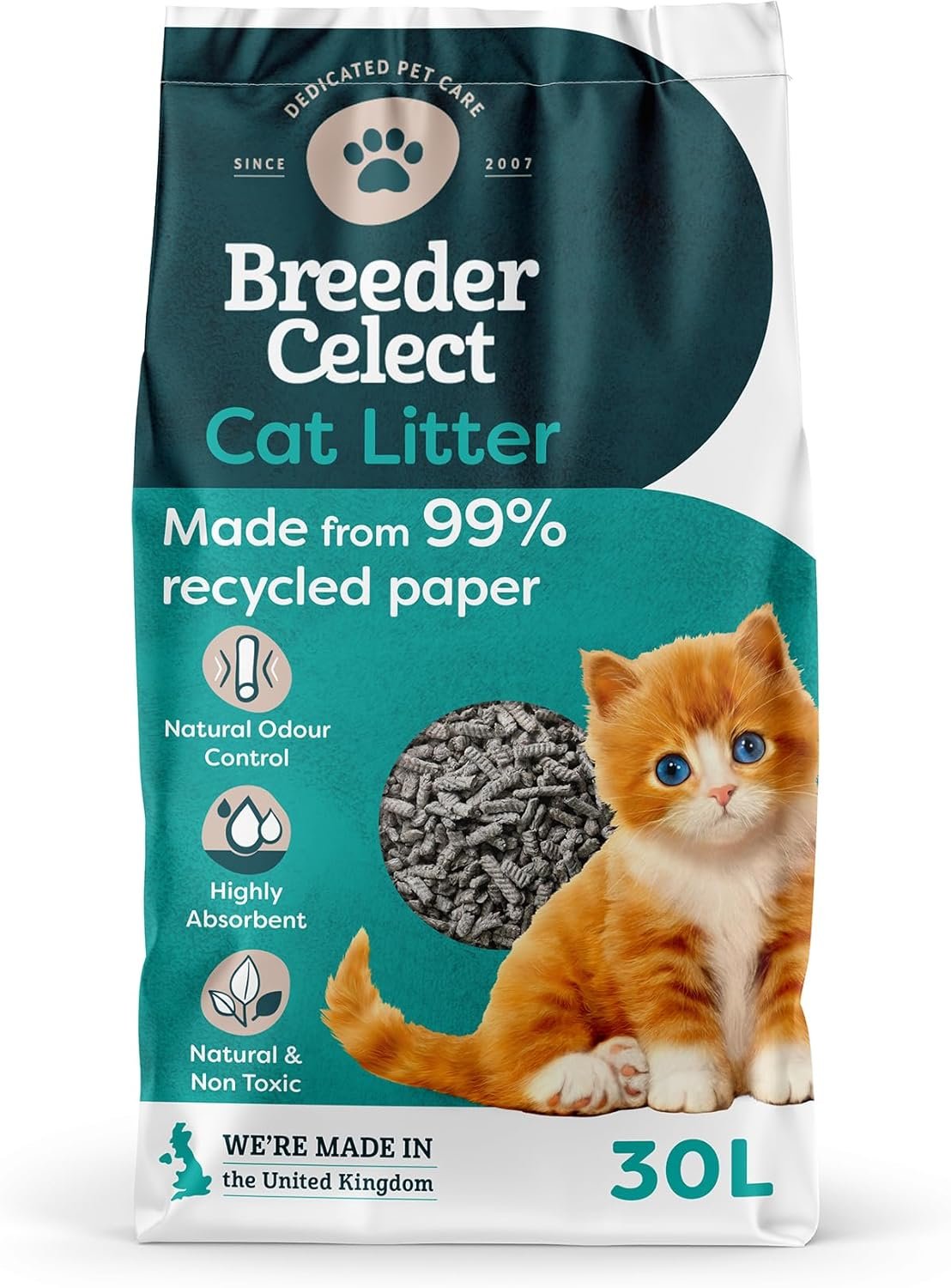
Recently, I decided to give Breeder Celect All-Natural Cat Litter a go. You’ve probably seen those blue bags popping up in pet shops or on Amazon, boasting about being made from 99% recycled paper. It promises excellent odour control, high absorbency, and a gentle touch for sensitive paws. But does it actually deliver? Or is it just a pile of soggy newspaper? I’ve lived with it, cleaned it, and dealt with my two cats’ very strong opinions on the matter. Here’s my honest, warts-and-all review for fellow UK cat lovers.
What Exactly Is Breeder Celect All-Natural Cat Litter?
So, what’s in the bag? Unlike the gritty clay litters that dominate supermarket shelves, Breeder Celect All-Natural Cat Litter is made almost entirely from recycled paper. The pellets are formed by compressing paper fibres with water and air—no chemicals, no fragrances, no nonsense. It’s a concept that initially made me sceptical. Could old newspapers really handle my British Shorthair’s… contributions?
The answer, surprisingly, is yes—mostly. The litter comes in a large 30-litre bag that feels remarkably light (around 8.4 kg). This is a massive win if, like me, you’ve ever thrown your back out dragging a 20 kg sack of clay litter home from the supermarket. The pellets themselves are uniform, cylindrical capsules that look a bit like hamster bedding. They’re soft to the touch, which immediately made me think of my older cat, who has slightly arthritic paws. This litter is also non-clumping, which is a different beast entirely from the clay stuff. It doesn’t form solid masses around waste; instead, it absorbs moisture into the pellets, which then break down into a finer texture. It’s a different cleaning routine, for sure, but one that has its own set of perks.
Why Paper? The Science Behind Recycled Cat Litter
When I first heard about paper litter, I imagined my cat’s tray turning into a papier-mâché project gone wrong. But the science is actually quite clever. Paper is incredibly absorbent—it’s why we use it to mop up spills. Breeder Celect harnesses this natural property by compressing recycled newsprint and cardboard into dense pellets. Each pellet acts like a tiny sponge, drawing moisture down and away from the surface. This keeps the top layer relatively dry, which is a bonus for your cat’s paws.
The environmental angle is huge for me. Traditional clay litter is strip-mined, which is terrible for the planet. Silica crystals are no better. But paper litter uses a waste product—old newspapers and cardboard—that would otherwise end up in a landfill. It’s biodegradable and compostable (though I’d hesitate to put used cat litter on my vegetable patch, but that’s just me). For the eco-conscious cat owner, it’s a genuinely responsible choice. It’s one of those small swaps that makes you feel a bit better about your pet’s carbon pawprint.
Handling the Mess: A Practical Cleaning Guide
Here’s where things get real. With clumping litter, you scoop out a solid ball and you’re done. With non-clumping paper litter, the process is a bit different. When my cats use the tray, the pellets underneath the wet patch absorb the liquid and gradually turn into a damp, sawdust-like substance. Solid waste, thankfully, sits on top and is easy to scoop out with a standard slotted scoop.
My routine now involves a daily scoop of the solids, followed by a gentle stir of the pellets to allow any damp areas to dry out a bit. Every few days, I’ll sift through and remove the broken-down, saturated material from the bottom. It sounds like more work, and at first it was. But I’ve actually found it’s less of a faff than dealing with rock-hard clay clumps that cement themselves to the bottom of the tray. The full tray change happens every week or so, and because the used litter is so light, it’s a doddle to bag up and bin. A top tip: keep the empty bag! It’s the perfect size for disposing of the used litter.
Odour Control: The Honest Truth
Let’s talk about the elephant—or rather, the cat—in the room. Odour control is where Breeder Celect All-Natural Cat Litter gets its most mixed reviews, and I can see why. On one hand, when my cats first use the tray, there’s genuinely no smell. The paper absorbs the urine and locks it away surprisingly well. On a day-to-day basis, my house doesn’t smell like a litter tray, which is a miracle with two cats.
However, and this is a big “however,” if you leave it too long between cleans, the ammonia smell can creep up on you. Because there’s no artificial fragrance to mask it, you’ll definitely notice when the litter is reaching its limit. This isn’t necessarily a flaw—it’s just the reality of a natural product. My solution has been a two-pronged attack: a light sprinkle of baking soda mixed into the pellets when I refill the tray, and a commitment to a daily spot-clean. With this routine, the odour control is genuinely excellent. Without it? Well, let’s just say you’ll get a very clear signal that it’s time to clean the tray.
Is It Safe? Health Benefits for Kittens and Senior Cats
One of my biggest worries with any new litter is dust. My older cat, Jasper, has a touch of feline asthma, and clay litter used to leave him wheezing. This is where Breeder Celect truly shines. It is virtually dust-free. When I pour it into the tray, there’s no cloud of particles. When my cats dig and scratch, the air stays clear. For cats with respiratory issues, allergies, or just for owners who don’t want a layer of fine dust on their bathroom floor, this is a game-changer.
The soft texture of the pellets is another major plus. They’re gentle on paws, making them ideal for kittens just learning to use a tray, or for senior cats with joint problems. I’ve also read testimonials from owners whose cats were recovering from surgery (like a perineal urethrostomy) and needed a litter that wouldn’t irritate sensitive areas or stick to fur. The non-toxic, chemical-free composition also means you don’t have to panic if your curious kitten decides to have a taste. It’s not a snack, but it’s not going to poison them either.
Litter Training and Feline Behaviour
Cats are creatures of habit, and changing their litter can be a minefield. When I switched from clay to Breeder Celect, I did it gradually—mixing the new pellets with the old litter over a week. My younger cat, Luna, took to it immediately. She seemed to like the soft texture and had no issues digging. Jasper, the old traditionalist, was a bit more suspicious. He gave me a look that said, “What is this, and why does it feel like my bedding?” But after a day or two, he was fine.
The non-clumping nature can sometimes confuse cats who are used to burying their business. Because the pellets don’t form a hard ball, some cats might feel their waste isn’t “covered.” I’ve found that a deeper layer of pellets (about 3–4 cm) helps satisfy their instinct to dig and bury. It’s also worth noting that the pellets can be a bit lightweight and might get kicked out of the tray easily. A litter mat is an absolute must to save your floors from becoming a sea of paper dots.
Comparison: How Does It Stack Up?
To give you a clearer picture, here’s how Breeder Celect compares to other common litter types available in the UK.
| Feature | Breeder Celect (Paper) | Clumping Clay | Wood Pellets | Tofu/Corn Litter |
|---|---|---|---|---|
| Primary Material | 99% Recycled Paper | Bentonite Clay | Pine/Cedar Wood | Soybean/Corn Starch |
| Clumping? | No | Yes | No (turns to sawdust) | Yes |
| Dust Level | Very Low | High | Medium | Low |
| Odour Control | Good (with maintenance) | Excellent | Good | Excellent |
| Weight | Very Light | Very Heavy | Light | Medium |
| Eco-Friendly | High (Recycled, Biodegradable) | Low (Mined) | Medium (Renewable) | High (Biodegradable) |
| Tracking | Medium-High | Low-Medium | Medium | Low |
| Cost (£/L) | ~£0.50 | ~£0.30-£0.60 | ~£0.25-£0.40 | ~£0.80-£1.20 |
As you can see, it’s a trade-off. Clay is the champion of clumping and odour masking, but it’s dusty, heavy, and an environmental nightmare. Wood is cheap but can be aromatic and doesn’t clump. Tofu is fantastic but often comes with a premium price tag. Breeder Celect sits in a sweet spot for those prioritising low dust, light weight, and a smaller environmental footprint.
Pros and Cons: The Final Verdict
After living with this litter for several months, here’s my balanced take.
Pros:
- Virtually Dust-Free: A huge benefit for cats with respiratory issues and for general household cleanliness.
- Extremely Lightweight: Easy to carry, pour, and dispose of.
- Eco-Friendly: Made from recycled paper and is biodegradable.
- Soft on Paws: Perfect for kittens, seniors, and post-surgery cats.
- Non-Toxic & Unscented: Safe for sensitive cats and owners who hate artificial fragrances.
- Good Value: A 30L bag lasts well and is competitively priced.
Cons:
- Non-Clumping: Requires a different, more hands-on cleaning routine.
- Odour Can Build Up: Needs diligent maintenance; no fragrance to mask smells.
- Can Track: The lightweight pellets are easily kicked out of the tray.
- Not for Deep Diggers: Very enthusiastic cats may scatter it everywhere.
Frequently Asked Questions
Can I flush Breeder Celect cat litter down the toilet?
While the litter is biodegradable, I wouldn’t recommend flushing it. Even “flushable” litters can cause blockages, especially in older UK plumbing systems. It’s much safer to bag it and put it in your household waste bin.
How often should I completely change the litter tray?
With two cats, I do a full change every 5–7 days. For a single cat, you could potentially stretch it to 10–14 days, provided you’re diligent with daily spot-cleaning and stirring. The key is your nose—if you start to smell ammonia, it’s time.
Is Breeder Celect cat litter safe for kittens?
Absolutely. It’s one of the safest options for kittens. It’s non-toxic if accidentally ingested, dust-free to protect their developing lungs, and soft on their little paws. Just ensure the pellets are at a depth they can easily walk in.
My cat is tracking the litter everywhere. What can I do?
This is a common issue with lightweight litters. Invest in a large, high-sided litter mat to catch the pellets. You can also look for a litter tray with a hood or high walls to contain the scatter. It won’t eliminate it, but it will make a big difference.
Does it work in automatic/self-cleaning litter boxes?
Generally, no. Most self-cleaning boxes are designed for clumping litters that form solid masses for the rake to sift out. The non-clumping, sawdust-like consistency of Breeder Celect can clog the mechanisms. It’s best used in a standard, manual litter tray.
Is it really better for the environment than clay litter?
Yes, significantly. Clay litter is obtained through strip mining, which destroys habitats and uses huge amounts of energy. Breeder Celect uses waste paper, is biodegradable, and has a much lower carbon footprint from production to disposal.
Final Thoughts
So, is Breeder Celect All-Natural Cat Litter the ultimate solution for every cat owner? No. If you want a litter you can scoop once a day in thirty seconds and forget about, a high-quality clumping clay might be more your speed. But if you’re looking for a dust-free, lightweight, and environmentally responsible option that’s gentle on your cat’s health, it’s a brilliant choice.
It has genuinely improved the air quality in my home and made litter duty less of a back-breaking chore. The odour control is excellent if you stay on top of it, and the value for money is hard to beat. For UK cat owners who care about their pet’s well-being and the planet’s health, Breeder Celect All-Natural Cat Litter is absolutely worth trying. Just be prepared to adopt a slightly new cleaning routine—it’s a small price to pay for a happier cat and a cleaner conscience.