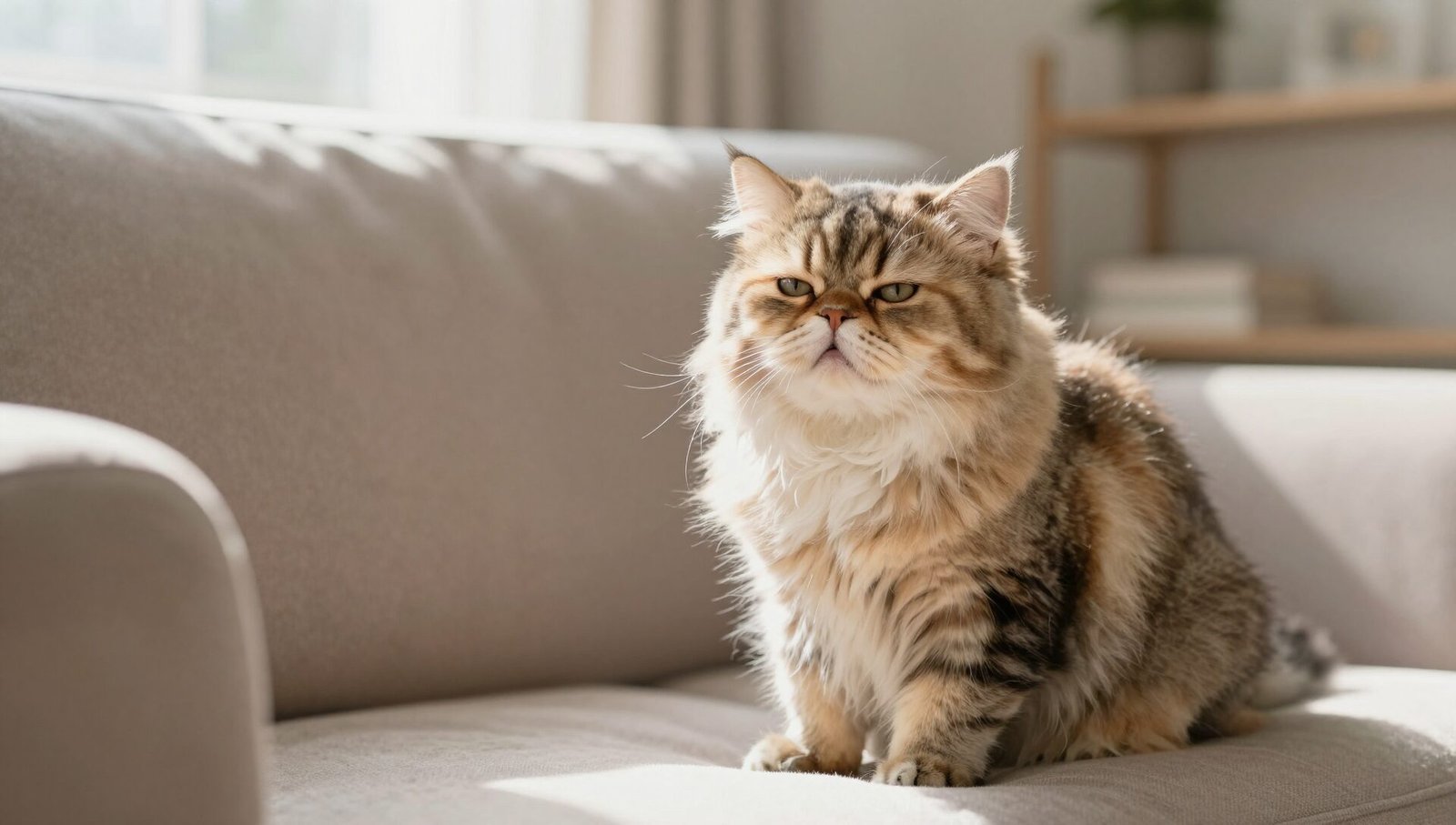
If you’ve ever wondered, “how do cats say I love you?”, you’re in excellent company. Unlike dogs, who wear their hearts on their furry sleeves with wagging tails and sloppy kisses, cats are far more subtle — and, frankly, a bit mysterious. As a lifelong cat owner who has shared my home with everything from a ginger tomcat with the confidence of a lion to a shy rescue tortie who took six months to sit on my lap, I can tell you this: cats absolutely do express love. You just need to learn their language.
In this guide, I’ll walk you through the nine most common and surprising ways your cat shows affection. Whether you’re a new kitten parent or a seasoned feline fancier, understanding these signals will transform your relationship with your furry companion. Let’s crack the code of feline communication together.
The Slow Blink — Cat Kisses from Across the Room
If there’s one gesture that perfectly answers “how do cats say I love you?”, it’s the slow blink. When your cat looks at you, narrows their eyes, and slowly closes them before opening them again, they’re essentially blowing you a kiss. In the cat world, closing your eyes in front of another being means “I trust you completely.” It’s vulnerable, it’s intentional, and it’s genuinely heart-melting.
I discovered this by accident with my rescue cat, Luna. For weeks, she’d hide under the bed. One evening, I sat on the floor and slowly blinked at her. She blinked back. I nearly cried. Within a fortnight, she was sleeping on my pillow.
Try this at home: Lock eyes with your cat gently (not a hard stare — that’s threatening), then slowly close and open your eyes. If they return the blink, congratulations — you’ve just exchanged “I love you” in fluent cat. This is a cornerstone of cat body language and one of the most reliable signs of trust and affection in feline communication.
Head Bumps and Cheek Rubs — Scent Marking as Affection
Ever had your cat ram their head into your chin, knee, or hand? That’s called “bunting,” and it’s one of the most endearing cat love signs. When cats rub their cheeks, forehead, and chin against you, they’re depositing pheromones from scent glands located in those areas. In practical terms, they’re marking you as theirs. You belong to them now. Wear that badge with pride.
Cats also do this with other cats they’re bonded to, furniture they love, and favourite spots in the house. When your cat headbutts you, they’re not just being affectionate — they’re mixing their scent with yours, creating a communal “family scent.” It’s their version of putting a ring on it.
My ginger tomcat, Milo, headbutts me every morning at breakfast. I used to think he was just hungry (he is), but over time I realised the headbutt comes before the meow for food. It’s his way of saying, “Good morning, I love you. Now feed me, peasant.”
Purring — The Sound of Feline Contentment
Purring is perhaps the most universally recognised sign that a cat is happy, but it’s more nuanced than many people realise. Yes, cats purr when they’re content — typically when they’re curled up on your lap, being stroked, or falling asleep in a warm spot. But cats also purr when they’re stressed, in pain, or recovering from illness. It’s a self-soothing mechanism as much as a social signal.
The trick is to read purring in context. If your cat is purring while kneading your leg with half-closed eyes and relaxed ears, that’s pure love. If they’re purring at the vet’s surgery while their pupils are dilated and their body is tense, that’s stress.
Research published in the journal Current Biology found that domestic cats have evolved a specific “solicitation purr” — a high-frequency cry embedded within the purr that triggers a nurturing response in humans, similar to the frequency of a baby’s cry. Sneaky? Absolutely. Effective? Without question. Your cat has literally evolved to manipulate you with love sounds, and honestly, I respect the hustle.
Key tip: Respond to your cat’s purr with gentle stroking and soft words. It reinforces the positive association and strengthens your bond. This is a fundamental aspect of feline communication that every cat owner should understand.
Kneading — The Biscuit-Making Ritual
When your cat rhythmically pushes their paws into your lap, a blanket, or your chest, they’re “kneading” — affectionately known as “making biscuits.” This behaviour originates from kittenhood, when kittens knead their mother’s mammary glands to stimulate milk flow. Adult cats retain this behaviour and direct it at the people and things they feel safest with.
So when your cat kneads you, they’re essentially saying, “You make me feel as safe as my mum did.” If that doesn’t make you feel warm and fuzzy, check your pulse.
Fair warning: some cats knead with claws out. If yours does, keep a thick blanket on your lap during cuddle sessions. I learned this the hard way — my thighs looked like I’d lost a fight with a rose bush after one particularly enthusiastic biscuit-making session with Luna.
Following You Around — Your Feline Shadow
Does your cat follow you from room to room? Do they sit outside the bathroom door when you’re in the shower? Do they appear on the kitchen counter the moment you start cooking? This is what behaviourists call “affiliative following,” and it’s a clear sign of attachment.
Cats are often labelled as independent and aloof, but the truth is that bonded cats actively seek proximity to their favourite humans. They want to be near you, even if they’re not always in the mood for physical contact. It’s rather like having a moody teenager who pretends they don’t care but always ends up in the same room as you.
Indoor cats especially tend to form strong attachment bonds, as their human is their primary social companion. If your cat follows you around the house, take it as a compliment — you’re their chosen person.
Showing Their Belly — The Ultimate Act of Trust
When a cat rolls over and exposes their belly, they’re displaying the most vulnerable part of their body. In the wild, this would be a risky move. In your living room, it’s a declaration of trust. Your cat is saying, “I feel completely safe with you.”
However — and this is crucial — it’s not always an invitation to rub that fluffy tummy. Many cats will expose their belly as a trust display but will react with a lightning-fast bunny kick if you actually touch it. It’s a trap. A beautiful, fluffy trap.
Some cats do love belly rubs. My cat Jasper will lie there for ages, purring like a motorboat while I stroke his belly. But Luna? Touch her belly and you’ll pull back a hand that looks like it’s been through a paper shredder. Know your cat’s temperament and respect their boundaries. The belly display itself is the love letter — you don’t always need to RSVP.
Slow Tail Movements and Tail Position
A cat’s tail is essentially a mood barometer, and understanding cat tail language is essential for reading feline affection. Here’s a quick guide:
| Tail Position | Meaning |
|---|---|
| Upright with a slight curve at the top | Friendly greeting — “I’m happy to see you!” |
| Quivering when you walk in | Excitement and affection — pure love |
| Wrapped around another cat or your leg | Bonding gesture — like holding hands |
| Slowly swishing while relaxed | Contentment |
| Puffed up or thrashing | Fear or aggression — back away |
The quivering tail is particularly special. When I come home from work, Milo meets me at the door with his tail straight up, vibrating like a tuning fork. He’s basically saying, “You’re back! I love you! Where have you been?!” It never gets old.
Bringing You “Gifts” — The Gruesome Token of Affection
Ah, the “gift.” A dead mouse on the doorstep. A half-eaten bird on the kitchen floor. A toy mouse deposited on your pillow at 3 AM. While not exactly the sort of gift you’d find at John Lewis, in the cat world, bringing you prey is the highest compliment.
Mother cats bring prey to their kittens to teach them how to hunt. When your cat brings you a “present,” they may be treating you as a helpless member of their family who clearly can’t hunt for themselves. It’s simultaneously insulting and adorable.
If your cat is an indoor cat, they may substitute live prey with toys, socks, or anything they can carry. My Luna brings me hair ties. Dozens of them. I’ve had to buy them in bulk because she hoards them under the sofa and then presents them to me like precious jewels. I accept each one graciously.
Tip: Never punish a cat for bringing you gifts. It’s a genuine expression of love and care. Simply dispose of any real prey quietly and redirect with play using enrichment toys.
Vocalisations — The Chirps, Trills, and Meows
Cats have developed an extensive vocal repertoire specifically for communicating with humans. Adult cats rarely meow at each other — they reserve this behaviour almost exclusively for us. Here’s a quick guide to feline vocal cat behaviour:
- Short meow: A standard greeting — “Hello!”
- Multiple meows: “I’m excited to see you!”
- Mid-pitch meow: A request — usually for food
- Prolonged mrrrooow: A complaint — “Where have you been?”
- Trill/chirrup: A friendly, melodic sound mothers use with kittens — when directed at you, it’s a sign of deep affection
- Purring: Contentment (when in relaxed context)
The trill is my favourite. It’s that adorable rolling sound, somewhere between a purr and a meow, that cats make when they greet you or acknowledge you. When I talk to Jasper, he trills back as if we’re having a proper conversation. Some cats are simply more talkative than others — breeds like Siamese and Burmese are famously chatty, while British Shorthairs tend to be quieter but no less loving.
Comparing Cat Love Languages: A Quick Guide
| Love Signal | What It Looks Like | What It Means |
|---|---|---|
| Slow blink | Eyes half-closed, gentle gaze | “I trust you completely” |
| Head bump | Firm nudge with forehead or cheek | “You’re mine” |
| Purring | Rumbling vibration when near you | “I’m happy and safe” |
| Kneading | Rhythmic paw pushing | “You feel like home” |
| Following | Shadowing you from room to room | “I want to be near you” |
| Belly exposure | Rolling onto back | “I trust you entirely” |
| Gift-bringing | Dead mouse, toy, or stolen sock | “I’m looking after you” |
| Tail quiver | Vibrating upright tail | “I’m thrilled you’re here!” |
How to Strengthen Your Bond With Your Cat
Understanding how cats say I love you is only half the battle — you need to speak their language back. Here are my top tips for strengthening your bond:
- Return the slow blink. It’s the easiest and most powerful thing you can do.
- Maintain a routine. Cats thrive on predictability — consistent feeding times, play sessions, and quiet time build trust.
- Use interactive play. Wand toys, feather teasers, and puzzle feeders satisfy their hunting instincts and create positive associations with you.
- Respect their boundaries. If your cat walks away, let them. Forced affection damages trust.
- Provide vertical space. Cat trees, shelves, and window perches give them security and stimulation.
- Talk to them. Studies show cats respond to their owner’s voice and prefer higher-pitched, sing-song tones. Yes, baby talk works.
- **Offer cat food puzzles and lick mats during mealtimes for added mental enrichment.
Pros and Cons of Understanding Feline Communication
| Pros | Cons |
|---|---|
| Deepens your bond with your cat | Some signs are subtle and easy to miss |
| Helps you identify stress or discomfort early | Misreading signals (e.g., the belly trap) can lead to scratches |
| Makes vet visits and grooming easier | Takes patience and observation over time |
| Reduces behavioural problems | Not all cats express love in the same ways |
| Creates a happier, more confident cat | Can make you overly emotional when they headbutt you 😺 |
FAQs
How do cats say I love you to their owners?
Cats express love through slow blinks, head bumps, purring, kneading, following you around, and bringing you “gifts.” Each behaviour is rooted in trust, bonding, and feline social habits. Learning to read cat body language is the key to understanding your cat’s unique love language.
Do cats understand when you say I love them?
Cats don’t understand the words themselves, but they absolutely pick up on your tone of voice, body language, and energy. Studies show cats respond more positively to higher-pitched, gentle tones. Pairing kind words with slow blinks and gentle strokes creates a powerful positive association.
Why does my cat stare at me and then slow blink?
A slow blink is one of the most genuine cat love signs. When your cat stares at you and slowly closes their eyes, they’re communicating deep trust and affection. Return the gesture by slowly blinking back — it’s a beautiful way to bond with your feline companion.
Is purring always a sign of a happy cat?
Not always. While purring usually indicates contentment, cats also purr when stressed, anxious, or in pain as a self-soothing mechanism. Context matters — relaxed body, half-closed eyes, and gentle kneading alongside purring are reliable indicators of a happy, loving cat.
Why does my cat bring me dead animals?
Bringing prey is a natural feline behaviour rooted in maternal teaching instincts. Your cat likely views you as part of their family and is sharing their catch — or teaching you to “hunt.” Indoor cats may bring toys, socks, or other objects instead. It’s a genuine token of affection, even if it’s a bit grim.
How can I tell if my cat loves me?
Look for a combination of signals: slow blinks, head bumps, purring when near you, kneading, following you around, sleeping near you, and a relaxed, upright tail when greeting you. Every cat expresses love differently based on their temperament and history, so pay attention to your cat’s unique patterns.
Conclusion
So, how do cats say I love you? They say it in a dozen subtle, beautiful ways — from the quiet trust of a slow blink to the enthusiastic headbutt that nearly knocks your tea over. They say it by following you to the bathroom, kneading your favourite jumper, and presenting you with a half-dead vole at dawn.
Cats aren’t aloof. They’re just particular. Once you learn to read their body language, vocalisations, and behaviour, you’ll realise your cat has been telling you they love you all along. The bond between a cat and their human is genuinely special — built on trust, routine, mutual respect, and the occasional stolen hair tie.
My advice? Slow blink at your cat tonight. See what happens. I promise it’ll be the sweetest conversation you’ve had all day — no words required. 😺