If you’re anything like me, bringing a new kitten into your home is a mix of pure joy and mild panic. You’ve bought the bed, the toys, and that expensive cat tree they’ll probably ignore in favour of the cardboard box. But amidst the purrs and play, there’s one serious box you absolutely must tick: Cat Vaccinations.
I know, I know. No one likes seeing their furry friend get a needle. It’s stressful for them and, let’s be honest, sometimes more stressful for us (especially if you’re the one trying to get them into the carrier). However, vaccinations are the invisible shield that keeps your feline friend safe from some truly nasty diseases.
In this guide, we’re going to dive deep into everything you need to know. From the essential kitten jabs to the booster schedule, costs in the UK, and how to spot side effects, we’ve got you covered. Let’s make sure your kitty is set up for a long, healthy, and happy life.
Why Cat Vaccinations Are Non-Negotiable
First things first—why do we actually do this? Think of your cat’s immune system like a trainee soldier. It’s ready to fight, but it doesn’t know who the enemy is yet. Vaccinations act as a training manual. They expose your cat to a safe, inactive form of a disease, allowing their body to build up antibodies without actually getting sick.
It’s a “dress rehearsal” for their immune system. If your cat ever comes into contact with the real virus later in life, their body will recognise it instantly and fight it off.
But here’s the kicker: infectious diseases are actually still very common. We just don’t see them as much because most responsible owners vaccinate. If you skip the jabs, your cat is vulnerable to everything from severe flu to fatal gastroenteritis. Plus, if you’re ever planning to use a boarding cattery, they won’t even look at your cat without an up-to-date vaccination record.
What Diseases Do Cat Vaccinations Cover?
So, what exactly are we protecting them from? There are “core” vaccines that every cat needs, regardless of whether they are a daring explorer or a sofa-hugger. Let’s break down the main nasties:
Feline Infectious Enteritis (FIE)
Also known as Feline Parvovirus or Feline Distemper, this is a nasty bit of work. It causes severe gastroenteritis and can be fatal, especially in kittens. The virus is incredibly hardy and can survive in the environment for a long time. If a kitten is infected in the womb or shortly after birth, it can lead to permanent brain damage. It’s a scary one, but the vaccine is highly effective.
Cat Flu (Feline Viral Rhinotracheitis)
Just like human flu, but for cats. It’s usually caused by the Herpesvirus (FHV) or Calicivirus (FCV). Symptoms range from a sniffly nose and watery eyes to pneumonia and skin infections. While it’s rarely fatal in healthy adults, it can knock a kitten for six. The worst part? Once a cat catches it, they can carry the virus for life and pass it on to others.
Feline Leukaemia Virus (FeLV)
This is one of the most common viral diseases in cats. It causes progressive anaemia and immune suppression. Most cats infected with FeLV sadly pass away within three years. It spreads through direct contact (grooming, sharing bowls, fighting). If your cat goes outside or lives with an unvaccinated cat, this jab is vital.
Feline Chlamydia & Bordetella
These are bacterial infections. Chlamydia primarily causes nasty eye problems (conjunctivitis) and breathing issues, common in multi-cat households. Bordetella is the feline version of kennel cough. While rarely fatal, they make your cat miserable.
Rabies
If you’re planning on travelling abroad with your moggie (thanks to the Pet Travel Scheme), you’ll need a rabies vaccine. It’s not required for cats living in the UK and Ireland as we are rabies-free, but it’s a legal requirement for travel.
When Should You Vaccinate Your Cat?
Timing is everything. You can’t just jab them once and forget about it. There’s a specific schedule to follow.
Kitten Vaccinations
Kittens receive some immunity from their mother’s milk, but this wears off by the time they are around 8 to 12 weeks old. That’s when they need their first set of jabs.
- First Vaccination: Usually given at around 9 weeks of age.
- Second Vaccination: Given 3 to 4 weeks later (around 12-13 weeks).
Crucial Tip: Do not let your kitten outside or mix with unvaccinated cats until about two weeks after their second injection. They aren’t fully protected until then! I made the mistake of letting my kitten explore the garden a bit too early once, and the worry wasn’t worth the five minutes of sunshine he enjoyed.
Adult Booster Vaccinations
Immunity doesn’t last forever. To keep those defences high, your cat will need annual booster vaccinations throughout their adult life. These are usually combined into one injection and often include a full health check with the vet—a great chance to ask about weight, diet, or any weird habits.
How Much Do Cat Vaccinations Cost in the UK?
Let’s talk money. Vet care isn’t cheap, but prevention is almost always cheaper than cure. The cost can vary depending on where you live (London prices are often steeper than rural Wales, for example), but here are the ballpark figures for the UK:
| Item | Estimated Cost | Notes |
|---|---|---|
| Kitten Primary Course | £70 – £90 | Includes both initial injections. |
| Annual Booster | £45 – £60 | Usually one injection per year. |
| Rabies Vaccine | £50 – £70 | Only needed for travel. |
Note: Prices are estimates as of 2024 and vary by practice.
While £45 a year might seem like a lot when your cat seems perfectly healthy, consider the cost of treating Feline Parvovirus—it could run into the thousands, with no guarantee of survival.
Indoor vs. Outdoor Cats: Do They Need the Same Jabs?
I often hear owners say, “My cat stays indoors, so they don’t need jabs.” This is a myth.
While indoor cats are at lower risk for things like FeLV (which requires fighting/snogging other cats), they still need protection. Viruses can be brought into the house on your shoes or clothes.
Even if you have a strictly indoor cat, I strongly recommend the core vaccines (FIE and Cat Flu). You never know if a window might be left open, or if you need to suddenly board them. Plus, many catteries require the full set of vaccinations, regardless of the cat’s lifestyle.
| Feature | Indoor Cat | Outdoor Cat |
|---|---|---|
| Core Vaccines (FIE/Flu) | Essential | Essential |
| FeLV Vaccine | Recommended | Essential |
| Rabies | Only for travel | Only for travel |
| Risk of Exposure | Low (via owners) | High |
Are There Side Effects to Cat Vaccines?
This is the bit that worries most owners. The good news? Serious side effects are incredibly rare.
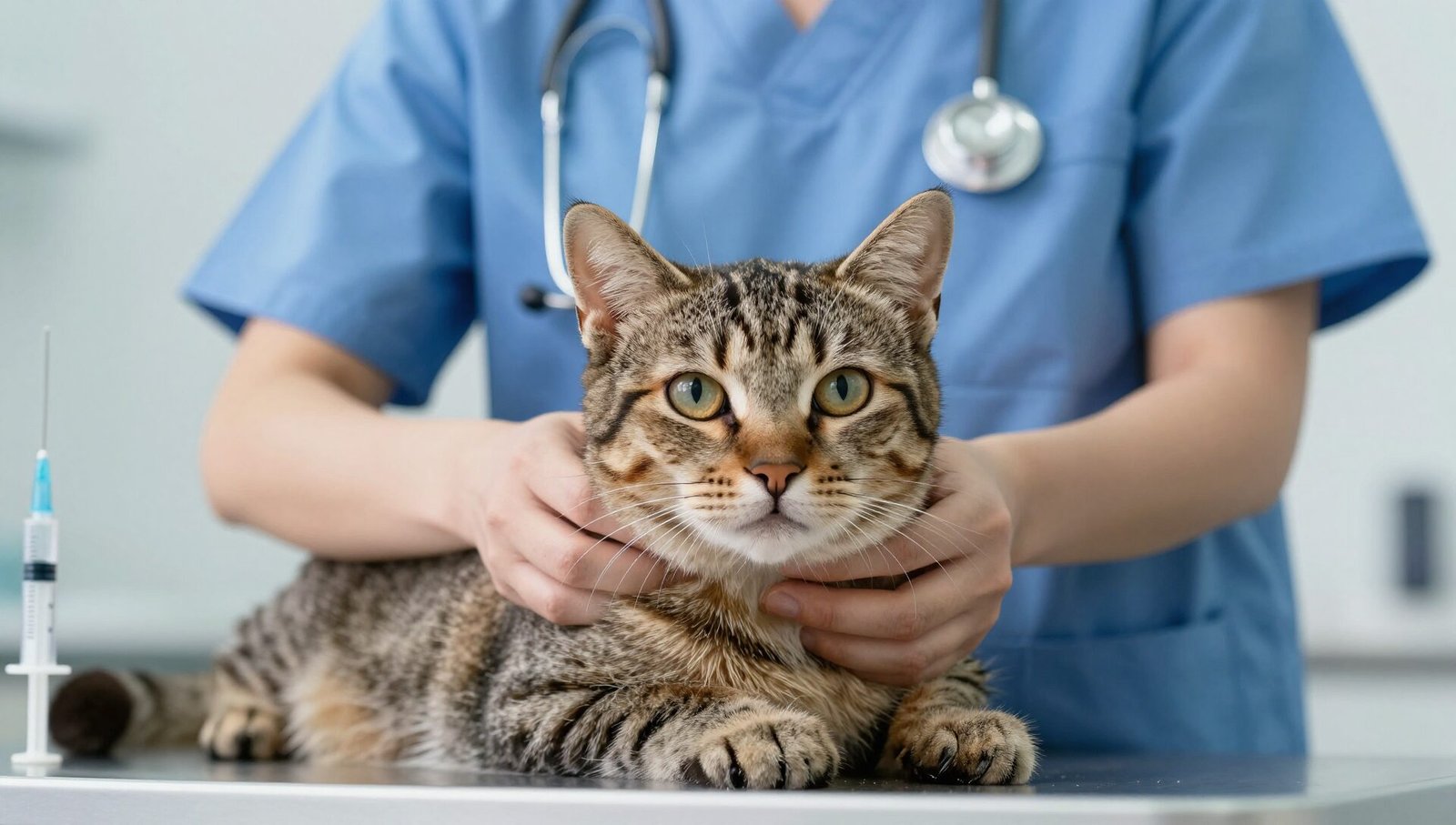
Most cat vaccinations are given as an injection, usually in the scruff of the neck. Vets are pros at this—it takes seconds. Afterwards, your cat might be a little subdued. Think of it like how we feel after a flu jab. They might have a sore arm (or in this case, neck) and want to sleep it off for a day or two.
What to watch for:
- Mild fever.
- Slight swelling at the injection site.
- Reduced appetite for 24 hours.
Red Flags (Contact your vet immediately):
- Vomiting or severe diarrhoea.
- Swelling of the face or muzzle.
- Difficulty breathing.
- Collapse.
Remember, the risk of a bad reaction is vastly outweighed by the risk of the diseases themselves.
Real-World Tips for Stress-Free Vet Visits
Let’s be real—getting a cat into a carrier can feel like wrestling a greased pig. Here are a few tips I’ve picked up over the years to make vaccination day smoother:
- Carrier Training: Leave the carrier out in the house a few days before the visit. Put a blanket with their scent inside and some treats. Make it a “safe space,” not a “torture box.”
- Pheromone Sprays: Products like Feliway sprayed in the carrier 15 minutes before travel can work wonders for calming nerves.
- The Biscuit Trick: If your cat is food motivated, bring their favourite high-value treat to distract them during the examination.
- Stay Calm: Cats pick up on our stress. If you’re panicking, they will too. Take a deep breath.
Everypaw Cat Insurance: A Safety Net
Even with the best vaccination schedule, accidents and illnesses happen. That’s where pet insurance comes in.
A word of warning from the study materials: If you fail to vaccinate your cat, treatment for vaccine-preventable conditions will likely be excluded from your insurance cover. Most insurers, including Everypaw, require you to keep up with your vet’s recommended vaccination schedule.
Everypaw offers 24/7 access to vet nurses, which is a lifesaver at 2 AM when your cat does something weird and you don’t know if it’s an emergency.
FAQs
Do indoor cats really need vaccinations?
Yes. While they are at lower risk for diseases like Feline Leukaemia, they are still susceptible to viruses like Feline Parvovirus and Cat Flu, which can be brought into the home on clothing or shoes. Furthermore, if you ever need to board them, catteries require proof of vaccination.
What happens if I miss a booster shot?
If you miss a booster by a few months, your vet will usually just give the injection and restart the annual cycle. However, if you miss it by a long time (e.g., over 18 months), your vet may require a “restart” course of two injections to ensure full immunity is rebuilt.
Can a vaccinated cat still get sick?
It’s possible, but highly unlikely to be severe. Vaccines significantly reduce the risk of infection and, if infection does occur, the symptoms are usually much milder and the recovery faster than in an unvaccinated cat.
How often do cats need vaccinations?
Generally, cats need a booster vaccination once a year for the rest of their lives to maintain optimal protection.
Are cat vaccinations legally required in the UK?
For general ownership, no. However, the Rabies vaccination is a legal requirement if you intend to travel abroad with your pet or bring a pet into the UK.
How long do cat vaccinations last?
The immunity provided by the primary kitten course and boosters generally lasts for about 12 months, which is why annual boosters are recommended by veterinary bodies like the BSAVA.
Conclusion
When it comes to Cat Vaccinations, it really is a case of “better safe than sorry.” It’s one of the most responsible and loving things you can do for your pet.
By staying on top of the kitten schedule and keeping up with annual boosters, you’re not just protecting your cat—you’re contributing to the wider health of the feline community. It keeps those nasty viruses at bay and ensures your moggie has the best shot at a long, healthy life by your side.
So, grab that carrier, pop in a few treats, and book that appointment. Your cat might give you the “stink eye” on the way to the vet, but they’ll thank you for it in the long run.