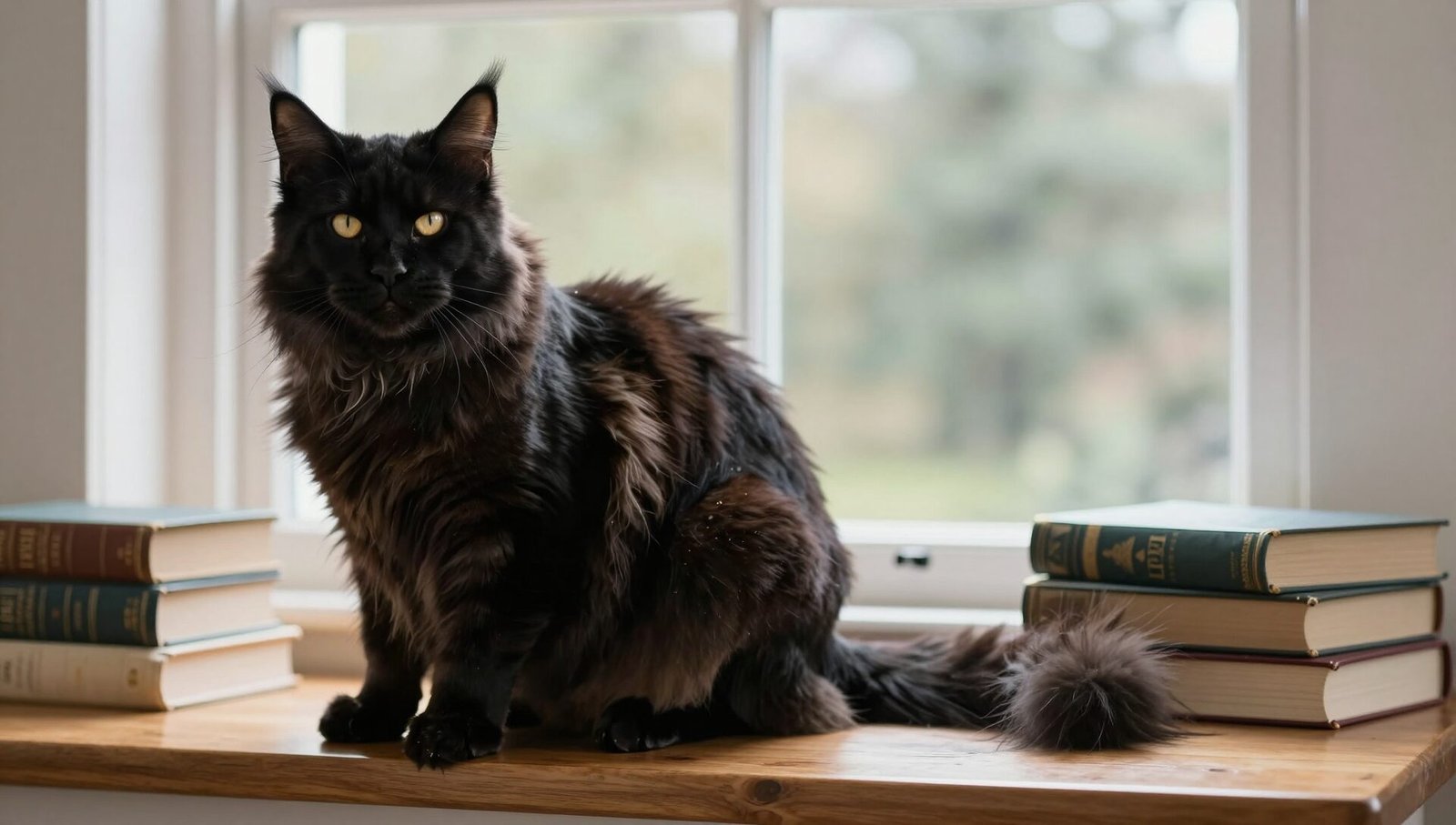
There’s something almost mythical about walking into a room and locking eyes with a full grown black Maine Coon cat. The first time I encountered one at a friend’s home in the Cotswolds, I genuinely thought someone had placed a small panther on the sofa. Jet-black fur rippling over a muscular frame, enormous tufted ears swivelling like satellite dishes, and a tail that could double as a feather duster — it was love at first sight. And honestly? I’ve never quite recovered.
If you’re reading this, chances are you’re either the proud owner of one of these magnificent creatures or you’re seriously considering bringing one into your life. Either way, you’re in the right place. I’ve spent years working alongside breeders, vets, and fellow cat enthusiasts across the UK, and I’ve compiled everything I know into this comprehensive guide.
We’re going to cover the lot — size, temperament, diet, grooming, health, enrichment, and the honest pros and cons of living with a cat that’s roughly the size of a small dog. So put the kettle on, settle in, and let’s dive into the wonderful world of the full grown black Maine Coon cat.
What Exactly Is a Full Grown Black Maine Coon Cat?
Before we get into the nitty-gritty of care, let’s clear up a common misconception. A black Maine Coon isn’t a separate breed. It’s simply a Maine Coon — one of the oldest and largest natural breeds in North America — sporting a gorgeous coal-black coat. The colour comes from a dominant gene that produces eumelanin, the pigment responsible for deep black fur. Simple genetics, stunning results.
Maine Coons originated in the harsh climate of Maine, USA, where they developed thick, water-resistant coats, large paws that act like natural snowshoes, and muscular bodies built for survival. Over centuries, they became beloved family companions, earning the nickname “gentle giants” for their calm, affectionate nature.
The black colour variation is particularly sought after because of its dramatic visual impact. In certain lighting, you might notice faint tabby markings — what breeders call “ghost striping” — or a shimmering silver undercoat known as the “black smoke” pattern. It’s like having a cat that’s perpetually dressed in black tie.
Here in the UK, Maine Coons have surged in popularity over the past decade. They consistently rank among the top five most popular breeds registered with the Governing Council of the Cat Fancy (GCCF), and the black variety is always in high demand. If you’ve got one lounging on your settee right now, count yourself lucky.
Size and Growth: How Big Do They Really Get?
Let’s address the elephant — or rather, the enormous cat — in the room. How big does a full grown black Maine Coon cat actually get? The short answer: bigger than you think. The long answer involves a growth timeline that spans several years, which is unusually long for a domestic cat.
Most domestic cats reach full size by 12 to 18 months. Maine Coons? They keep growing until they’re three to five years old. That’s right — your kitten won’t truly be “full grown” until it’s practically middle-aged by feline standards. This slow maturation is what allows them to develop the impressive bone density and muscle mass the breed is known for.
| Metric | Average Domestic Cat | Full Grown Male Maine Coon | Full Grown Female Maine Coon |
|---|---|---|---|
| Weight | 4–5 kg | 6–11 kg | 4–7 kg |
| Height | 23–25 cm | 25–40 cm | 20–36 cm |
| Body Length | 46 cm | Up to 100 cm | Up to 90 cm |
| Full Maturity | 1–2 years | 3–5 years | 3–4 years |
The record-holder for the longest domestic cat ever was a Maine Coon named Stewie, who measured an astonishing 123 cm from nose to tail tip. That’s over four feet of cat. While not every black Maine Coon will reach those dimensions, you should absolutely prepare for a cat that commands serious space on your furniture — and in your heart.
Temperament and Personality Traits
Here’s where the full grown black Maine Coon cat truly earns its reputation. You’d expect a cat this size to be aloof, territorial, or demanding. In reality, they’re the complete opposite — and that’s what makes them so utterly irresistible.
Maine Coons are famously affectionate, playful, and deeply social. They’re often described as “dog-like” because they’ll follow you from room to room, greet you at the door, and even learn to play fetch. My friend’s black Maine Coon, a handsome chap named Midnight, figured out how to open the kitchen cupboard where his treats were stored within a fortnight. Cheeky? Absolutely. Intelligent? Without question.
One of their most charming traits is their vocalisation. Maine Coons don’t really meow in the traditional sense. They chirp, trill, and warble — almost like they’re having a proper conversation with you. The first time your black Maine Coon trills at you from across the room, you’ll likely burst out laughing. It’s utterly delightful.
They’re also remarkably patient, which makes them brilliant with children and other pets. Noise, chaos, visitors — none of it fazes them. If anything, a busy household seems to energise them. They genuinely thrive on social interaction and can become withdrawn or anxious if left alone for extended periods. So if you work long hours, consider whether you can provide the companionship this breed craves.
Diet and Nutrition for a Giant Feline
Feeding a full grown black Maine Coon cat isn’t quite the same as feeding your average moggie. Their size, muscle mass, and slow growth trajectory mean their nutritional needs are unique — and getting it right is absolutely critical to their long-term health.
Protein is king. Look for high-quality cat food where a named animal protein — chicken, salmon, turkey — is listed as the first ingredient. Avoid foods bulked out with corn, wheat, or vague “meat derivatives.” Your cat is an obligate carnivore, not a grain processor. I learned this the hard way with my first cat, who developed dreadful digestive issues on a cheap supermarket brand. A switch to a protein-rich diet transformed her health within weeks.
Here’s a quick comparison of food types to consider:
| Food Type | Pros | Cons |
|---|---|---|
| Dry Kibble | Convenient, good for dental health | Lower moisture content, can be carb-heavy |
| Wet Food | High moisture, palatable | More expensive, spoils quickly |
| Raw Diet | Natural, high protein | Requires careful preparation, risk of bacteria |
| Premium Commercial | Balanced nutrition, vet-approved | Higher cost |
Fresh water is equally important. Maine Coons are famously obsessed with running water, so investing in a pet water fountain is well worth it. My friend’s Midnight refuses to drink from a still bowl — he’ll only sip from the tap or his fountain. Diva behaviour? Perhaps. But hydration is non-negotiable for kidney health.
Overfeeding is a genuine risk with this breed. Because they’re naturally large, it’s easy to mistake extra weight for natural bulk. A healthy full grown black Maine Coon should have a visible waist when viewed from above, and you should be able to feel (but not see) their ribs. If you’re unsure, your vet can assess their body condition score during routine checkups.
Grooming and Coat Care Essentials
The glorious coat of a full grown black Maine Coon cat is one of its most defining features — but it does come with maintenance responsibilities. The good news? It’s less work than you’d expect for a longhaired breed.
Unlike Persians, whose coats are dense and prone to matting, Maine Coons have silky, semi-water-resistant fur that’s relatively self-maintaining. That said, daily brushing is still recommended, particularly around the belly, behind the ears, and around the “britches” — the fluffy fur around the hind legs where tangles love to form.
Here’s my recommended grooming routine:
- Daily: Brush with a wide-tooth metal comb to detangle, followed by a slicker brush for smoothness and shine
- Weekly: Check and clean ear tufts — debris accumulates easily in that dense fur
- Fortnightly: Trim nails (those paws are enormous, and their claws grow proportionally)
- Every 3–4 months: Bathe if needed (many Maine Coons actually enjoy water — shocking, I know)
For black-coated cats specifically, regular brushing enhances that stunning glossy sheen. There’s something deeply satisfying about running a brush through jet-black fur and watching it gleam in the light. Plus, grooming sessions double as bonding time. Most Maine Coons actively enjoy being brushed once they’re accustomed to it — it’s a win-win.
Health, Lifespan, and Common Conditions
Let’s talk about the serious stuff. A full grown black Maine Coon cat is generally a robust and hardy breed, but like all pedigrees, they carry certain genetic predispositions that responsible owners need to understand.
The average lifespan sits between 12 and 15 years, though many reach their late teens with proper care. Swedish pet insurance data from 2003–2006 found that 74% of Maine Coons lived to 10 years or older, and 54% reached 12.5 years. With excellent nutrition, regular veterinary care, and a safe indoor environment, some have been known to reach 18 or even 20 years.
The most significant health concern is hypertrophic cardiomyopathy (HCM), a heart condition where the muscle walls thicken, eventually leading to heart failure. Approximately 30% of Maine Coons carry a gene that increases their HCM risk. The gold standard for prevention is an annual echocardiogram (heart ultrasound), and I’d strongly recommend discussing this with your vet.
Other conditions to watch for include:
- Hip dysplasia — unusual in cats but more common in giant breeds
- Polycystic kidney disease (PKD) — a genetic condition causing cysts in the kidneys
- Spinal muscular atrophy (SMA) — affects mobility but not cognitive function
- Stomatitis — painful inflammation of the mouth and gums
Always ask breeders for health testing documentation, particularly for HCM and PKD. Responsible breeders in the UK will have had both parents screened. It’s not just good practice — it’s essential.
Indoor vs Outdoor Living
One of the biggest decisions you’ll face as a Maine Coon owner in the UK is whether to keep your cat indoors or allow outdoor access. It’s a topic that sparks lively debate among feline enthusiasts, and honestly, there are valid arguments on both sides.
Indoor living offers safety from traffic, predators, disease, and theft — and sadly, pedigree cats are frequently targeted by thieves. A full grown black Maine Coon cat kept indoors will almost certainly live a longer, healthier life. However, indoor cats require significantly more enrichment to prevent boredom and behavioural issues.
Outdoor access allows natural behaviours like climbing, hunting, and exploring — activities that a breed this intelligent and athletic craves. Many UK owners opt for a compromise: a secure garden, a “catio” (cat patio), or supervised harness walks. Yes, you can absolutely harness-train a Maine Coon. They’re remarkably adaptable.
Here’s my honest take: if you can provide a stimulating indoor environment with cat trees, window perches, puzzle feeders, and regular interactive play, your black Maine Coon will thrive indoors. If you do allow outdoor access, ensure they’re microchipped, neutered, and wearing a quick-release collar with an ID tag.
Training, Enrichment, and Play
Don’t let their laid-back demeanour fool you — a full grown black Maine Coon cat is exceptionally intelligent and needs mental stimulation to stay happy. Without it, you might find your curtains shredded, your plants uprooted, or your kitchen cupboards mysteriously opened at 3 a.m. (ask me how I know).
Litter training is rarely an issue with Maine Coons. They take to it naturally and are fastidiously clean. However, their size means you’ll need a larger-than-average litter box — standard ones are simply too small. A high-sided or top-entry box works well for containing scatter, and most owners prefer clumping, unscented litter.
Scratching behaviour is completely natural and should be redirected, not punished. Provide sturdy scratching posts (sisal rope is ideal) in multiple locations. Floor-to-ceiling cat trees serve double duty as scratching surfaces and climbing structures.
Enrichment ideas I’ve found particularly effective:
- Interactive puzzle feeders that make them work for treats
- Feather wands and laser pointers for daily play sessions (15–20 minutes minimum)
- Window perches with views of birds or garden activity
- Cardboard boxes and paper bags (never underestimate the simple things)
- A companion cat or dog — Maine Coons genuinely enjoy company
These cats are also one of the few breeds that reliably learn to play fetch. It’s one of those delightful dog-like quirks that makes living with a Maine Coon such a unique experience.
Pros and Cons of Ownership
Let’s be brutally honest. Owning a full grown black Maine Coon cat is wonderful — but it’s not without its challenges. Here’s a balanced look:
Pros:
- Incredibly affectionate and social — they genuinely bond with their family
- Gentle and patient with children and other pets
- Stunning, photogenic appearance that turns heads
- Intelligent and trainable — they can learn tricks and even walk on a lead
- Playful and entertaining well into adulthood
- Adaptable to various living situations with proper enrichment
Cons:
- They eat significantly more than average cats, increasing food costs
- Grooming requires daily commitment to prevent tangles
- Breed-specific health conditions require vigilant screening and potential vet bills
- They need more space and enrichment than smaller breeds
- Their size means bigger litter boxes, stronger cat trees, and more robust furniture
- They don’t tolerate long periods of solitude well — not ideal for very busy households
If you can meet these needs, the rewards are immeasurable. There’s a reason people fall hopelessly in love with this breed.
Costs and Where to Find Them in the UK
If you’ve decided a full grown black Maine Coon cat is right for you, prepare your wallet. Maine Coon kittens in the UK typically cost between £800 and £2,500, with black-coated kittens often sitting at the higher end due to demand. Kittens from championship bloodlines or rare colour patterns can exceed £3,000.
When purchasing from a breeder, always verify:
- GCCF or TICA registration of both parents
- Health screening certificates for HCM and PKD
- Clean, spacious living conditions for the kittens
- Socialisation practices (kittens raised in a home environment are better adjusted)
- References from previous buyers
Adoption is always worth exploring too. Breed-specific rescues like Maine Coon Rescue UK occasionally have adult cats available, and adopting an older cat means you skip the kitten phase entirely — plus you’re giving a deserving cat a second chance.
Don’t forget ongoing costs: quality food, pet insurance (strongly recommended for pedigree cats), routine vet care, grooming supplies, and enrichment. Budget roughly £60–£100 per month for a Maine Coon, excluding any unexpected veterinary expenses.
Frequently Asked Questions
How big does a full grown black Maine Coon cat get?
Males typically weigh between 6 and 11 kg, while females range from 4 to 7 kg. They can measure up to 100 cm in length including the tail and stand up to 40 cm tall. Full maturity is usually reached between three and five years of age, which is significantly longer than most domestic cat breeds.
Is a black Maine Coon a different breed from other Maine Coons?
No. A full grown black Maine Coon cat is simply a Maine-Coon with a black coat colour. The black colouration is determined by genetics but doesn’t affect the cat’s size, personality, temperament, or health in any way. They share identical breed characteristics with Maine Coons of all other colours.
Do black Maine Coons get along with children and other pets?
Absolutely. Maine Coons are widely regarded as one of the most family-friendly cat breeds. Their gentle, patient temperament makes them excellent with children, and they typically adapt well to dogs and other cats. They genuinely thrive in busy, social households.
What health conditions should I watch for in a black Maine Coon?
The most significant concern is hypertrophic cardiomyopathy (HCM), a heart condition affecting around 30% of the breed genetically. Other conditions include polycystic kidney disease (PKD), hip dysplasia, and spinal muscular atrophy (SMA). Regular veterinary checkups and genetic testing are essential for early detection and prevention.
How much grooming does a full grown black Maine Coon cat need?
Daily brushing is ideal, focusing on the belly, behind the ears, and the hind legs where tangles form most easily. Their coat is silky rather than heavily matted, so sessions are typically quick and enjoyable for the cat. Regular ear cleaning, nail trimming, and occasional baths complete the routine.
Can I keep a full grown black Maine Coon cat indoors?
Yes, and many UK owners choose this option for safety reasons. However, indoor Maine Coons require substantial enrichment — cat trees, puzzle feeders, window perches, and daily interactive play sessions of at least 15–20 minutes. A catio or supervised harness walks are excellent compromises if you want to offer safe outdoor access.
Conclusion
Living with a full grown black Maine Coon cat is one of the most rewarding experiences a cat lover can have. They’re majestic, affectionate, intelligent, and endlessly entertaining — a breed that transforms a house into a home. But they’re also a significant commitment. Their size demands space, their coat demands attention, their health demands vigilance, and their social nature demands your time.
If you can provide quality nutrition, regular grooming, proactive healthcare, and genuine companionship, you’ll be rewarded with a gentle giant who’ll curl up on your lap (or rather, across your entire sofa) for years to come. Just don’t say I didn’t warn you about the treat cupboard situation. 😺