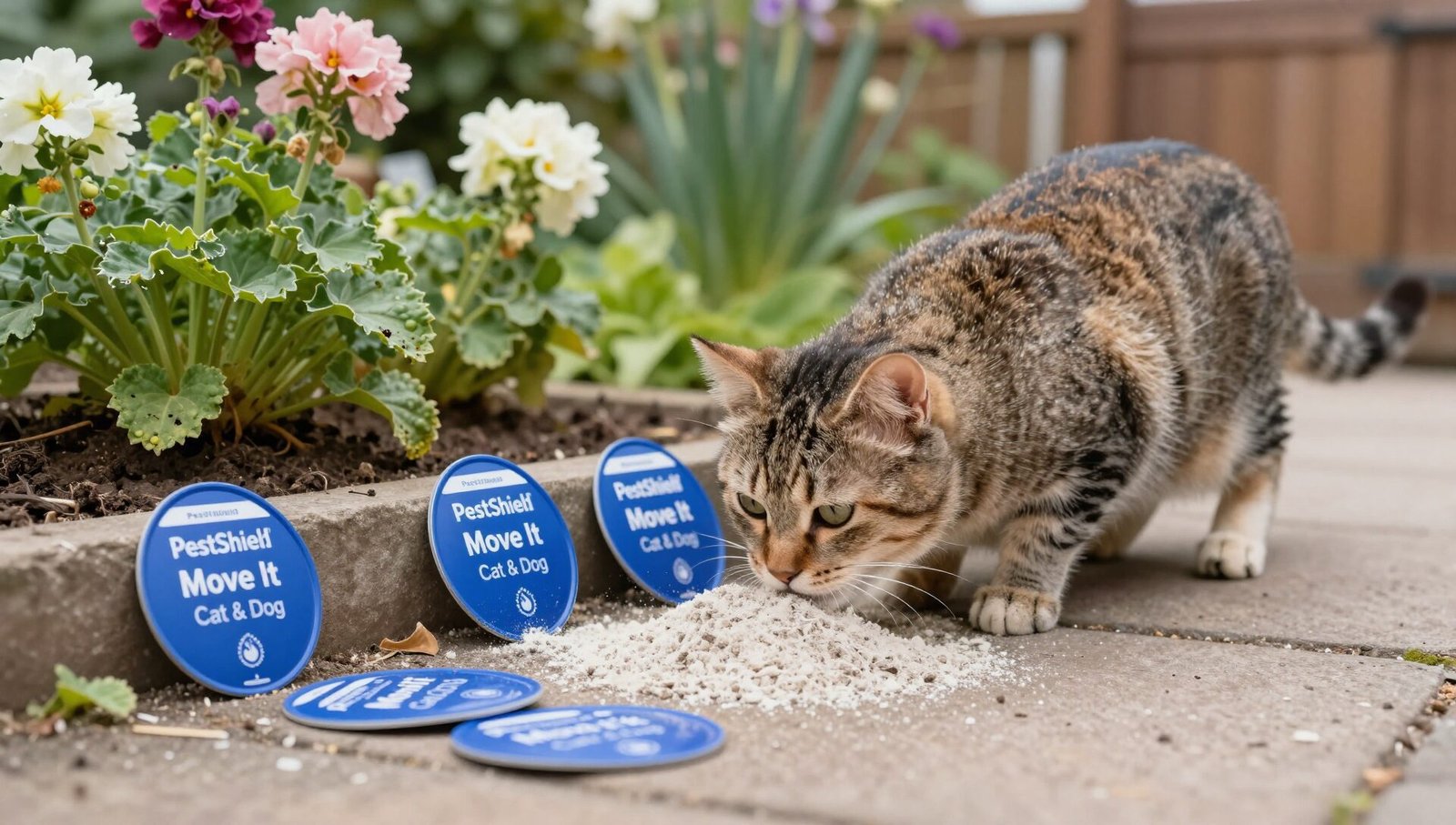
If you’ve ever stepped out into your garden on a sunny British morning, coffee in hand, only to be greeted by the unmistakable scent of a neighbourhood cat’s overnight visit, you know the frustration. It’s a rite of passage for many UK gardeners. You spend hours tending to your flower beds, only to find them treated as a public lavatory by the local feline population.
I’ve been there. I’ve tried shouting at them (they just stare), I’ve tried the ultrasonic deterrents (the foxes seemed immune), and I’ve even considered building a fortress around my prize-winning petunias. So, when I heard about the PestShield Move It Cat & Dog Garden Repellent, a 100% natural powder promising to solve this smelly problem, I was cautiously optimistic.
This article is my deep dive into this popular UK product. We’ll look at what it is, how to use it, and most importantly, whether it actually works. I’ll share my own experiences, warts and all, and explore some longer-term strategies for reclaiming your garden from furry invaders. So, grab a cuppa, and let’s get into it.
What Exactly Is PestShield Move It Cat & Dog Garden Repellent?
Let’s get down to the nitty-gritty. The PestShield Move It Cat & Dog Garden Repellent is a granular powder product sold in the UK, primarily through retailers like Amazon. It comes in a 240g shaker bottle, which, as we’ll see later, is a point of contention for many buyers.
The brand, PestShield, markets this as a humane, non-toxic solution for deterring cats and dogs from fouling, digging, or scratching in your garden. The key selling points are its “100% natural” composition and its ease of use—just sprinkle it on the problem area. It’s designed for use on borders, lawns, patios, and around sheds.
However, a quick look at the safety warnings tells a slightly more nuanced story. The product carries warnings that it is “Harmful to aquatic life with long lasting effects” and “May cause an allergic skin reaction.” This is an important reminder that “natural” does not always mean “harmless.” The active ingredients are not explicitly listed on the Amazon page, which is a common and frustrating practice for many garden chemical products in the UK. Based on the scent, it likely contains a blend of essential oils or plant extracts known to be aversive to cats, such as citronella, eucalyptus, or lavender.
How to Use It: Application Tips for Best Results
Using the product is straightforward, but getting the best results requires a bit of strategy. Here’s a step-by-step guide based on the manufacturer’s instructions and my own trial and error.
1. Identify the Hotspots: Don’t just sprinkle it everywhere. Observe your garden for a few days. Where do the cats consistently foul? Is it the freshly turned soil of your vegetable patch? The corner of the lawn near the shed? The gravel border? Target these specific areas.
2. Apply a Light Dusting: The instructions say a “light dusting” is enough. This is key. You are not trying to create a snowdrift of powder. A thin, even layer is more effective and economical. The shaker top helps with this, though some reviewers (myself included) have found it can get clogged.
3. Timing is Everything: Apply it in the late afternoon or early evening. Cats are most active at dawn and dusk, so applying it just before their prime mischief-making hours gives the product the best chance to work.
4. Reapply After Rain: This is the biggest drawback. The powder is not waterproof. A typical British downpour will wash it away completely. You need to reapply after any significant rainfall, which, let’s be honest, could be every other day in some parts of the UK.
5. Combine with Other Methods: For best results, don’t rely on this alone. Use it in conjunction with other deterrents, which we’ll discuss later. Think of it as one tool in your anti-cat arsenal.
My Honest Experience: Does It Actually Work?
Alright, the moment of truth. I bought two bottles of the PestShield Move It Cat & Dog Garden Repellent to test in my own garden, which had become a favourite haunt for a particularly bold ginger tom.
First Impressions: My first gripe was the bottle itself. It arrived feeling alarmingly light. Upon opening it, it was clear the bottle was less than half full. This is a sentiment echoed loudly in hundreds of online reviews. It feels like you’re paying more for packaging than product. The powder itself has a strong, herbal, slightly citrusy smell. Not unpleasant to me, but potent.
The Test: I applied it as directed to a raised bed where the ginger tom had been digging. The next morning, success! No cat poo, no digging. I felt triumphant. For three glorious days, my garden remained pristine. I reapplied on day four, just to be safe.
The Reality Check: Then it rained. A solid, hour-long Manchester shower. The powder vanished. That evening, the ginger tom was back, looking smug. I reapplied after the soil dried. It worked for another two days. The cycle continued.
The Verdict: Yes, the PestShield Move It Cat & Dog Garden Repellent can work. It does create an aversive scent barrier that some cats will avoid. However, its effectiveness is highly dependent on dry weather and consistent reapplication. It is not a “set it and forget it” solution. For the price and the small amount of product you get, it can become an expensive and time-consuming habit. It’s a temporary fix, not a permanent one.
Pros and Cons: A Balanced Breakdown
Every product has its strengths and weaknesses. Here’s a fair assessment based on my experience and a broader look at customer feedback.
Pros
- Non-Toxic and Natural: It’s safe to use around children and pets (once applied and settled), which is a huge plus for family gardens.
- Easy to Apply: The shaker bottle makes application simple and targeted.
- Can Be Effective: When used correctly and in the right conditions (dry weather), it does deter many cats from treated areas.
- Humane: It doesn’t harm the animals, just discourages them.
- Versatile: Can be used on various surfaces—soil, gravel, paving.
Cons
- Not Weatherproof: The biggest flaw. It washes away in the rain, requiring frequent and costly reapplication.
- Small Quantity for the Price: Many users feel deceived by the oversized bottle containing very little powder. It’s poor value for money.
- Effectiveness Varies: Some cats are simply not bothered by it. As many reviews show, some cats will happily sit on the powder.
- No Clear Ingredient List: The lack of transparency about what’s actually in the powder is a drawback for cautious consumers.
- Can Cause Skin Reactions: The safety warning about allergic reactions means you should wear gloves when applying.
Alternatives to PestShield: Other Deterrent Methods
PestShield is just one option. A smart cat owner uses a multi-pronged approach. Here are some effective alternatives:
| Method | How it Works | Pros | Cons |
|---|---|---|---|
| Ultrasonic Deterrents | Emits a high-frequency sound when motion is detected. | Covers a wider area, works in all weather. | Can be expensive, some pets/children may hear it. |
| Physical Barriers | Netting over beds, prickly mats (like “Cat Scat”), or chicken wire. | Very effective, a one-time purchase. | Can be unsightly, requires installation effort. |
| Scent-Based Granules | Similar to PestShield, but different brands (e.g., “The Big Cheese”). | Easy to apply, non-toxic options available. | Same weather issues as PestShield, variable results. |
| Motion-Activated Sprinklers | A sensor detects movement and sprays a jet of water. | Highly effective, cats hate being sprayed. | Uses water, can be triggered by humans, expensive. |
| DIY Solutions | Citrus peels, coffee grounds, vinegar solutions. | Free or very cheap. | Often less effective, needs very frequent reapplication. |
My advice? Combine methods. Use a physical barrier like netting for your most precious beds, and use a scent deterrent like PestShield for larger, open areas. The motion-activated sprinkler is the gold standard if your budget allows.
Keeping Your Cat Safe: Toxicity and Safety Concerns
As a cat owner myself, my primary concern is always the safety of my own pets. The PestShield Move It Cat & Dog Garden Repellent is labelled “non-toxic,” which is reassuring. However, the “harmful to aquatic life” warning is a red flag you should not ignore.
This means you must never apply it near ponds, streams, or areas where runoff could enter water systems. If you have a garden pond, be extremely cautious. The powder could contaminate the water and harm fish and frogs.
The “allergic skin reaction” warning applies to humans. I always wear gardening gloves when applying it. After application, wash your hands thoroughly. If you have children who play in the garden, apply the powder to areas they don’t frequent, or apply it in the evening after they’ve come inside.
What about your own cat? While it’s designed to deter them, monitor your cat’s reaction. If they show signs of irritation (excessive sneezing, pawing at their face), stop using the product in areas they access. Always store the bottle out of reach of pets and children.
Understanding Cat Behaviour: Why Do Cats Foul Gardens?
To solve a problem, it helps to understand it. Why does the neighbourhood cat insist on using your prized rose bed as a litter tray?
- Territory Marking: Cats are territorial creatures. Fouling in your garden is often a way of marking their territory, leaving scent signals for other cats. This is especially common in areas with a high cat population.
- Ideal Substrate: To a cat, your finely tilled vegetable patch or soft, sandy border is the perfect toilet. It’s loose, easy to dig, and allows them to bury their waste—a natural instinct.
- Stress or Change: A new cat in the neighbourhood, building work, or changes in the household can cause a cat to soil outside its normal area.
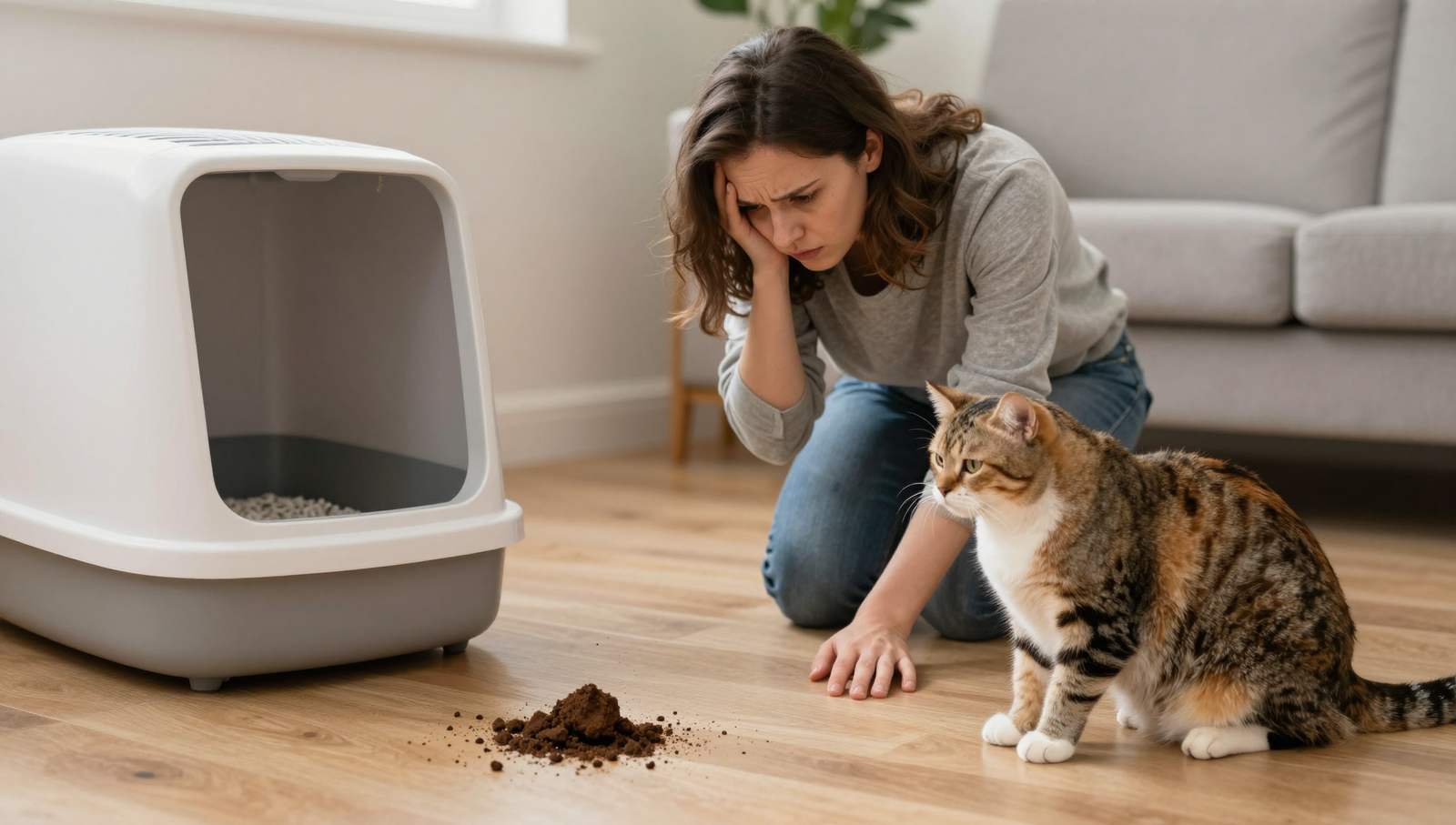
- Lack of a Suitable Alternative: If the cat’s own litter tray at home is dirty, too small, or in a stressful location, they may seek out a more appealing spot—like your garden.
Understanding this can help you design better deterrent strategies. For example, making your soil less appealing (by covering it with large pebbles or netting) is often more effective than just adding a scent.
Creating a Cat-Proof Garden: Long-Term Solutions
While products like PestShield offer a quick fix, the most sustainable approach is to make your garden inherently less attractive to visiting cats.
Plant Deterrent Herbs: Cats dislike the smell of certain plants. Consider planting lavender, rosemary, lemon thyme, or the “scaredy cat plant” (Coleus canina) around your borders. These are beautiful, useful herbs that double as a natural deterrent.
Use Texture: Cats prefer soft, diggable soil. Cover bare earth with a layer of large, rough-textured pebbles, pine cones, or chopped-up twigs. This makes the surface unpleasant for digging and fouling.
Install Prickly Strips: Plastic mats with soft, harmless plastic spikes (like “Cat Scat mats”) can be laid on the soil and covered with a thin layer of mulch. They don’t harm the cat but make the surface uncomfortable to walk on.
Provide an Alternative: This sounds counterintuitive, but some experts suggest creating a small, designated “cat toilet” area in a corner of your garden with a sandbox. This can sometimes lure cats away from your main beds.
Conclusion: Is PestShield Worth Your Money?
So, the final verdict on the PestShield Move It Cat & Dog Garden Repellent. Is it a miracle cure for your garden woes? No, absolutely not. Is it completely useless? Also, no.
It is a mediocre, short-term solution with some significant drawbacks. It works, but only under ideal conditions: dry weather, consistent reapplication, and on cats that happen to be sensitive to its scent. The poor quantity for the price and the lack of weather resistance make it difficult to recommend wholeheartedly.
My Recommendation: If you have a small, specific problem area and you’re looking for a quick, non-toxic fix, it might be worth a try. But go in with low expectations. For a more serious, long-term solution, invest in physical barriers like netting or prickly mats, or consider a motion-activated sprinkler. Combine these with scent deterrents for the best chance of success.
Reclaiming your garden from feline invaders takes patience and a multi-faceted approach. There’s no single magic powder, but with the right combination of strategies, you can enjoy your outdoor space without the unwanted surprises. Good luck, fellow gardener!
Frequently Asked Questions
How often do I need to reapply PestShield Move It Cat & Dog Garden Repellent?
You should reapply it every few days, and always immediately after any rainfall. The powder is not waterproof and will wash away, leaving your garden unprotected. In a typical British summer, this could mean reapplying two or three times a week.
Is PestShield safe to use if I have my own cat?
The product is labelled “non-toxic” and is designed to be a deterrent, not a poison. However, every cat is different. Monitor your own cat for any signs of irritation, such as sneezing or pawing at their face. If you notice any adverse reactions, stop using it in areas your cat frequents.
Can I use PestShield on my lawn?
Yes, you can sprinkle it on your lawn. However, be aware that it may need to be reapplied after mowing, as the mower could disturb or remove the powder. A light dusting is all that’s required.
Why does the bottle seem half-empty?
This is one of the most common complaints about the product. The 240g bottle is often reported to arrive less than half full. This is either due to settling during transit or, more likely, a deliberate choice in packaging size. It’s frustrating and gives the impression of poor value for money.
Are there any plants that naturally repel cats?
Absolutely! Planting lavender, rosemary, lemon balm, citronella, and the “scaredy cat plant” (Coleus canina) can help deter cats. They dislike the strong smells. Plus, they’ll make your garden look and smell lovely to humans.
What’s the most effective long-term way to stop cats fouling in my garden?
The most effective long-term strategy is a combination of methods. Use physical deterrents like netting over vegetable beds or plastic “scat mats” on borders. Plant strongly-scented herbs. Make the soil less appealing with large pebbles. And for open lawns, a motion-activated sprinkler is highly effective. Relying on a single scent-based product like PestShield alone is rarely enough for a persistent problem.