🩺 Introduction to Sonogram for Cats
A sonogram for cats, also called an ultrasound, is a special test that helps vets see inside your cat’s body without any pain or cuts. This test uses sound waves that are too high for us to hear, bouncing them off your cat’s organs to create pictures on a screen. These pictures help vets check how your cat’s insides are doing—like the liver, kidneys, or even a growing kitten if your cat is pregnant.
For cat owners in the UK, understanding what a sonogram for cats is and why it’s important can help you feel more confident if your vet recommends one. This article will explain in simple steps what happens during a sonogram, why vets use it, and how it helps keep your furry friend healthy.
🔑 What You’ll Learn & Why It Matters
- What a sonogram is: Helps you understand a painless, non-invasive procedure for your cat.
- Why sonograms are used: Shows real-time images inside organs for better diagnosis.
- What to expect during the procedure: Prepares you and your cat for a smooth vet visit.
🔊 What is a Sonogram? Understanding Ultrasound Technology for Cats
If you’ve ever heard a vet talk about a “sonogram” for your cat, you might wonder what that really means. A sonogram is another name for an ultrasound scan. It’s a way vets use sound waves to see inside your cat’s body without any cutting or pain.
How Does Ultrasound Work for Cats?
Ultrasound uses high-frequency sound waves, which are sounds so high-pitched humans can’t hear them. A small device called a probe sends these sound waves into your cat’s body. When the waves hit different organs or tissues inside, they bounce back as echoes.
These echoes are picked up by the probe and turned into pictures on a computer screen. This way, the vet can watch real-time moving images of your cat’s organs, like their stomach, kidneys, or heart. It’s like seeing a video of your cat’s insides.
What Makes Ultrasound Different from X-Rays?
You might have heard of x-rays, too. They’re another way vets look inside your cat, but they work differently. X-rays use radiation to create a still picture of the inside, showing mostly bones and some outlines of organs. Ultrasounds, however, create moving images using sound waves, which helps vets get more detail about soft tissues and fluid-filled organs.
Unlike x-rays, ultrasounds don’t expose your cat to radiation. Also, ultrasounds can show things like blood flow or how organs move, which x-rays can’t. That’s why ultrasounds are often chosen when vets need a closer look at your cat’s internal health.
Why Is Ultrasound Useful for Cats?
Ultrasound helps vets check on many things:
- Detecting pregnancies,
- Spotting problems with organs like the liver or bladder,
- Guiding tiny tools to take tissue samples safely without surgery.
It’s a key tool in figuring out why your cat might be feeling unwell or to watch their health over time.
In Summary
A sonogram or ultrasound is a safe, sound-based way to get a picture of your cat’s insides. It’s different from x-rays because it uses sound instead of radiation and shows moving images in real time. This technology helps vets understand your cat’s health better so they can give the right care. If your vet suggests an ultrasound, now you know how it works and why it’s helpful for your furry friend.
❓ Why Do Cats Need a Sonogram? Common Reasons for Ultrasound in Cats
What Is a Sonogram and How Does It Work?
A sonogram, also called an ultrasound, is a tool vets use to look inside your cat’s body without any cuts or pain. It uses sound waves that humans can’t hear. These waves bounce off your cat’s organs and create a moving picture on a screen. This helps vets see what’s going on inside in real time. Imagine it like a live video of your cat’s tummy or chest.
Why Would Your Cat Need a Sonogram?
There are several reasons your vet might suggest an ultrasound. It’s all about understanding your cat’s health in a clear and gentle way.
Checking for Pregnancy
If your cat is expecting kittens, a sonogram is a safe way to check how many babies she has and how they are growing. This is much easier and more detailed than just feeling her belly. It gives you peace of mind that everything is okay.
Spotting Internal Problems
Sometimes cats don’t show obvious signs when something is wrong inside. A sonogram helps to spot issues in organs like the liver, kidneys, pancreas, or bladder. For example, if your cat is losing weight or seems unwell, the vet can look for things like infections, cysts, or tumours. This is much better than guessing from just looking or using x-rays.
Guiding Surgeries and Treatments
If your cat needs a small operation or a biopsy (where a tiny piece of tissue is taken for testing), sonograms guide the vet to the exact spot. Think about it like using a GPS to find the right address without wandering around. This makes surgeries safer and quicker.
Why Do Vets Prefer Ultrasounds Over X-Rays Sometimes?
X-rays show hard things like bones and can give a quick look at your cat’s insides, but they only create a still image. Ultrasounds, on the other hand, show moving pictures and can see soft tissues and fluid-filled organs better. Plus, ultrasounds don’t use radiation, which makes them safer for repeated checks.
What Happens During a Sonogram for Your Cat?
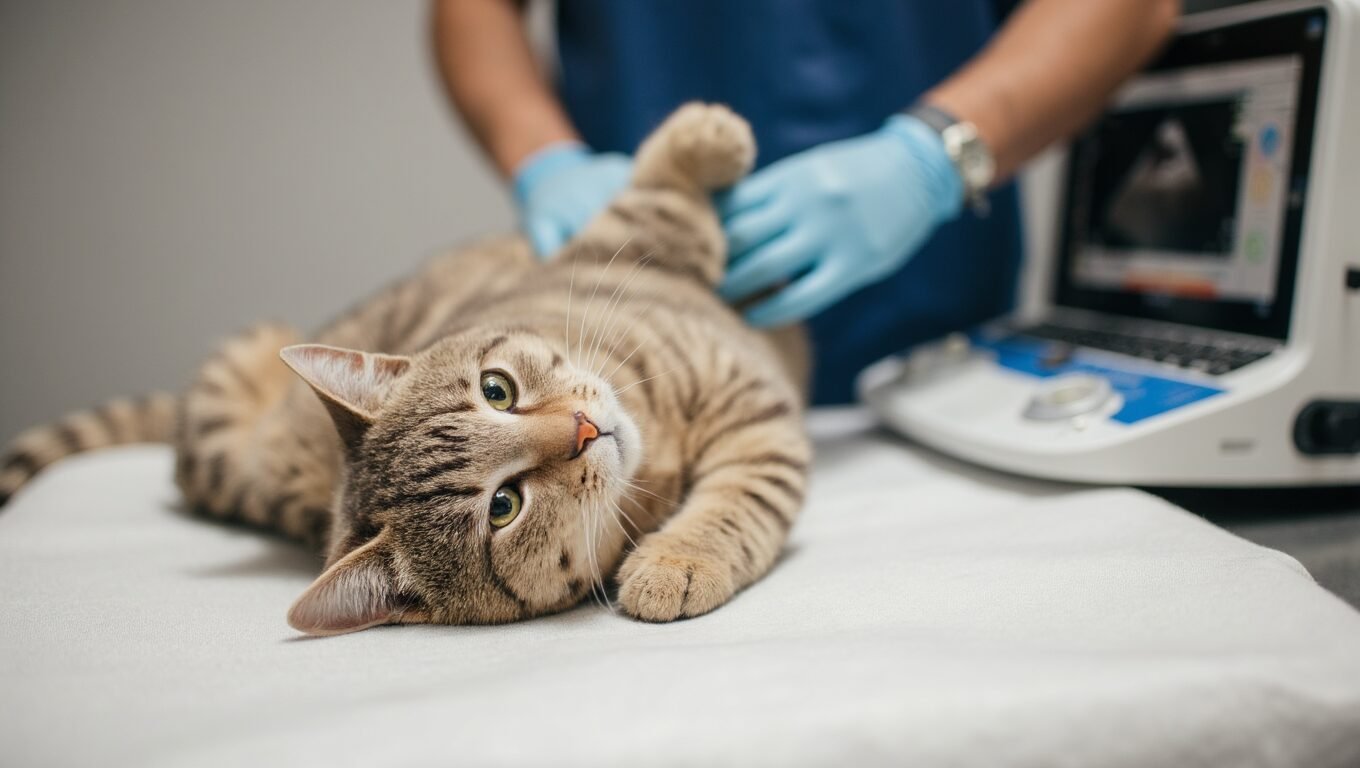
Usually, the vet will gently shave a small patch of fur where the probe needs to touch the skin. They use special gel to make sure the sound waves get through well. Your cat might be lying down calmly or sometimes sedated if needed [Source: Yahoo UK Style]. The vet moves the probe around and watches the screen, sometimes sharing what they see with you.
How Does This Help You as a Cat Owner?
Knowing exactly what’s going on inside your cat’s body helps you and your vet make the best decisions for treatment or care. It can spot problems early or give confirmation that everything is fine. Ultrasounds are a powerful, non-invasive way to keep your cat healthy.
If your vet recommends a sonogram, it means they want to get a clearer picture to help your furry friend feel their best. It’s a careful, caring step in making sure your cat gets the right care.
🩻 The Procedure: What to Expect During Your Cat’s Ultrasound
Getting an ultrasound (or sonogram) for your cat can sound a bit worrying, but knowing what to expect makes a big difference. Ultrasound is a safe and painless way vets check inside your cat’s body using sound waves that you can’t hear. Here’s what usually happens, step-by-step, in the UK.
How Should I Prepare My Cat Before the Ultrasound?
Usually, your cat won’t need to fast (avoid food) before the scan, but it’s best to check with your vet just in case. Try to keep your cat calm at home by offering a quiet resting spot and some gentle petting. If your cat’s nervous, bringing a familiar blanket or toy might help them feel comforted during the visit.
What Happens When We Arrive at the Vet?
Once you’re at the vet, the staff will take your cat to a quiet room. The ultrasound might be booked in advance since it can take around 30 minutes or longer. Sometimes you can stay with your cat, which can make them feel safer. Ask your vet if this is allowed, so you know what to expect.
How Is the Ultrasound Done?
- Preparing the Skin: The vet will gently shave the fur on the area they want to scan—usually the belly. This helps the ultrasound probe (a small hand-held device) make proper contact with the skin.
- Applying Gel: They put some clear, water-based gel on the shaved area or probe. This gel helps sound waves travel better for clearer pictures.
- The Scan: The vet will move the probe around on your cat’s skin. You might see the inside of your cat’s organs on the ultrasound screen—kind of like a moving picture. It’s completely painless, and your cat will usually feel just some light pressure.
Sometimes your cat may need a bit of mild sedation (a calming medicine) to stay calm and still. Your vet will decide if this is necessary [Source: Yahoo UK Style].
How Can I Help My Cat Stay Calm?
Speak softly and gently pet your cat if you can stay nearby. If your cat gets very anxious, ask the vet about safe calming aids like sprays or supplements used in the UK. Bringing along a favourite toy or blanket from home may also reassure your cat.
What Happens After the Ultrasound?
Once the scan is done, your cat can usually go home right away. If sedation was used, the vet will keep an eye on your cat until they fully wake up. The vet may discuss what they saw on the scan straight away or let you know after the vet team reviews the images carefully.
What Questions Should I Ask My Vet?
- What exactly are you looking for during the ultrasound?
- Will my cat need sedation, and what are the risks?
- How long will the scan take?
- Can I stay with my cat during the procedure?
- When and how will I get the results?
- Will additional tests or treatments be needed based on the ultrasound findings?
Ultrasound is a helpful, gentle way vets get a clear look inside your cat to help keep them healthy. Knowing these steps can help you feel ready and confident to support your cat through it. If you have worries, just ask your vet—they’re there to help both you and your fluffy friend.
🩻 How Do Sonogram Results Help Vets Diagnose Cat Health Problems?
When your cat has a sonogram (also called an ultrasound), it uses sound waves to create moving pictures of the inside of your cat’s body. These pictures help vets see organs like the liver, kidneys, bladder, and intestines in real time, showing how they look and work.
The sonogram gives vets a closer look at these organs than a regular x-ray, which only shows a flat outline. Because it shows movement and soft tissues clearly, it can reveal issues like inflammation, tumours, or blockages that might be causing your cat pain or illness.
What Do Typical Sonogram Results Look Like?
During the ultrasound, the vet will see images on a screen. Healthy organs usually look smooth and have a consistent shape and texture on the screen. For example, a normal kidney looks a bit like a bean with a clear outline, while the liver should have a uniform texture without lumps.
If something isn’t right, the ultrasound might show changes like:
- Spots or lumps inside an organ
- Swelling or shrinkage of organs
- Fluid build-up around tissues
- Unusual shapes or textures
These findings help the vet understand what might be going wrong inside your cat.
Why Might Follow-Up Ultrasounds Be Needed?
Sometimes, vets ask for another ultrasound later on. This can be because:
- The first scan didn’t show a clear picture of the problem
- Your cat’s condition needs monitoring over time
- Treatment is started, and the vet wants to see if it’s working
- New symptoms appear, requiring another look
Follow-up scans help vets track changes and make better decisions about your cat’s care.
After your cat’s sonogram, your vet will talk to you about what they saw on the images. They might explain if organs look normal or if there’s something unusual. If needed, they’ll suggest further tests or treatments based on what the ultrasound shows. Understanding these results helps you work with your vet to give your cat the best care possible.
💷 Cost of Sonogram for Cats in the UK
What are typical costs for a cat sonogram in the UK?
Getting a sonogram (also called an ultrasound) for your cat can cost quite a bit, but prices vary. Generally, you might expect the cost to be anywhere from £40 to over £300. Simple procedures like checking for pregnancy usually cost less, while full abdominal scans to investigate health problems tend to be pricier [Source: Newsweek UK].
What factors affect the cost of a cat ultrasound?
- Complexity of the scan: A quick scan, like for pregnancy, takes less time and costs less. More detailed scans that look at organs like the kidneys, liver, or heart require more time and expertise, so they cost more.
- Vet expertise: If the vet is highly trained and experienced in performing ultrasounds, you’ll likely pay more. Specialist vets or those with advanced qualifications usually charge higher fees due to their skill level.
- Location: Where you live in the UK makes a difference. Vets in large cities or affluent areas often charge more than those in smaller towns or rural regions.
- Equipment quality: Advanced ultrasound machines that provide clearer, more detailed images might be factored into the price.
How to budget for your cat’s ultrasound
First, ask your vet for a cost estimate before booking. Explain your budget honestly—vets can often suggest alternatives or payment options if cost is a concern. Keep in mind it’s worth paying for quality because a detailed scan helps get better diagnosis and treatment.
If your cat’s condition is serious, the ultrasound could be part of a bigger vet bill including sedation, follow-up visits, or lab tests—set aside some extra funds just in case.
How to talk to your vet about sonogram costs
Feel free to ask your vet directly:
- What exactly will the scan check?
- How long will it take?
- Will my cat need sedation?
- What kind of ultrasound machine do you use?
- Can you provide an estimate or price range?
- Are there any payment plans or pet insurance options?
Having this open conversation helps you prepare financially and ensures you get the best care for your furry friend without surprises.
Getting an ultrasound for your cat is an important step to understand their health better. Costs vary widely depending on the scan’s complexity, the vet’s experience, and where you live. By asking clear questions and planning ahead, you can make sure your cat gets the care they need within your budget.
⚖️ Sonogram versus Other Diagnostic Tools: What is Best for Your Cat?
What Exactly Is a Sonogram for Cats?
A sonogram, also called an ultrasound, uses high-frequency sound waves to look inside your cat’s body. These sound waves are above what humans can hear, and when sent into the body, they bounce off organs and tissues. A special probe on the cat’s skin picks up these echoes and turns them into moving images on a screen. This lets the vet see internal organs in real time, like watching a live video.
How Does This Compare to X-Rays?
X-rays use radiation to create a still image in black and white, showing shapes but not much detail of what’s inside organs. They’re great for spotting broken bones or dense objects. But unlike sonograms, X-rays can’t show the movement or texture inside soft tissues like the liver or kidneys. So, if the vet wants to see how your cat’s organs are working or spot subtle tissue changes, ultrasound often works better.
What About MRIs for Cats?
MRI, short for Magnetic Resonance Imaging, uses strong magnets and radio waves to create detailed images of the body’s soft tissues. It gives more detailed pictures than either sonograms or X-rays, and can show very small changes inside organs or the brain. But MRIs are expensive, take longer to perform, and often require general anaesthesia. They’re usually done at specialist veterinary hospitals, not every local clinic.
When Is a Sonogram the Best Choice?
- Looking at soft organs: Sonograms are great at showing the liver, kidneys, bladder, intestines, and heart in motion.
- Checking pregnancies: They can confirm if a cat is pregnant and show the kittens moving inside.
- Guiding biopsies: During certain procedures, sonograms guide vets where to collect tissue samples safely.
- Quick and available: Most vets in the UK have ultrasound machines, making sonograms easier and cheaper to get than MRIs.
- Real-time images: Seeing the organs moving helps diagnose problems that an X-ray can’t catch.
What Are the Limits of Sonograms?
- Not detailed like MRI: Ultrasounds don’t show as much tiny detail, so some conditions may need MRI scans for a clear answer.
- Doesn’t image bones well: Sonograms can’t replace X-rays if the problem is in the bones or lungs.
- Operator skill matters: The quality of the sonogram depends big time on how experienced the vet is with using the machine.
Summary for UK Cat Owners
If your cat needs a scan, a sonogram is often the first best step. It’s widely available across UK veterinary practices, less costly, and provides good real-time images of soft tissues. X-rays still have their place, especially for bone injuries or chest checks. MRIs are powerful but usually reserved for complex cases needing very detailed scans. Your vet will decide the best tool based on your cat’s symptoms and what part of the body needs checking.
We want you to feel confident asking about these scans when your furry friend isn’t feeling right. Each tool has its benefits, and sonograms play a key role in gentle, effective diagnosis for cats in the UK.
🐱 Tips for Preparing Your Cat for a Sonogram
What Is a Sonogram for Cats?
A sonogram uses high-frequency sound waves to create moving images of your cat’s insides. It helps vets check organs like the kidneys, liver, or bladder without surgery or X-rays.
How Can I Help Reduce My Cat’s Stress Before the Sonogram?
Cats can feel anxious about visits to the vet, especially for procedures like sonograms. Here’s how to help:
- Keep things calm at home before the appointment. Play quietly with your cat or give gentle strokes to help them relax.
- Use a comfortable carrier. Line it with a soft blanket or towel that smells like home.
- Bring familiar items like your cat’s favourite toy or a small piece of bedding.
- Talk softly and calmly during the car journey to help soothe your cat.
Should My Cat Fast Before the Sonogram?
Most cats don’t need to fast before their sonogram, but it’s always best to check with your vet. Some vets might ask for a short fast depending on what they’re checking.
What Happens at the Vet’s?
- Your cat might need to be lightly sedated or stay awake, depending on their comfort and the type of scan [Source: Yahoo UK Style].
- The vet will gently shave a small patch of fur where the probe (a smooth device) touches your cat’s skin.
- A clear gel is used to help the probe get good contact and create clear images.
- The sonogram usually takes between 5 and 30 minutes.
How Can I Help My Cat Stay Calm During the Scan?
- Stay close and speak so your cat hears your voice.
- Bring treats to offer once the scan is done.
- Ask if you can stay in the room to keep them company.
After the Sonogram
Your vet will explain the results either right away or soon after. Your cat might be a little tired if sedation was used. Keep them comfy and watch them closely at home.
Final Thoughts
Preparing your cat with calm, familiar surroundings and gentle care makes a big difference. Simple things like a comfy carrier, your soothing voice, and familiar smells will help keep stress low and make the sonogram smoother for everyone. If you have questions, just ask your vet—they’ll guide you through the whole process.
❓ Frequently Asked Questions about Sonogram for Cats
What is a sonogram (ultrasound) for cats?
A sonogram, also called an ultrasound, is a safe and painless test that uses high-frequency sound waves to create real-time pictures of your cat’s inside body parts. It helps vets see organs like the bladder, kidneys, liver, and heart without any cutting or pain.
Is an ultrasound safe for my cat?
Yes, ultrasounds are very safe. They don’t use radiation like X-rays, so there’s no risk from that. The sound waves are simply bounced off your cat’s internal organs to create images. Your cat won’t feel anything harmful during the scan.
How do I prepare my cat for an ultrasound?
Usually, your cat won’t need to fast before an ultrasound, but it’s best to ask your vet just in case. Your cat might need to stay still for the scan, so sometimes a mild sedative is given, especially if your cat is anxious or wiggly. The fur will be gently shaved where the probe touches the skin, so you might notice a small patch without fur afterward.
How long does the ultrasound take?
The length depends on what the vet is looking for. A quick scan, like checking for pregnancy, might take less than 5 minutes. A detailed scan of the abdomen or chest could take 20 to 30 minutes. Your vet will plan the appointment based on how thorough the scan needs to be.
What can an ultrasound detect in cats?
Ultrasounds can show a lot! They help spot issues like:
- Pregnancy and fetal health
- Problems with organs such as kidneys, liver, pancreas, bladder, and intestines
- Tumours or cysts
- Ingested foreign objects inside the stomach or intestines
- Heart problems through a special ultrasound called an echocardiogram that looks at blood flow and heart function
Will my cat be awake during the ultrasound?
Your cat may be awake, especially for quick scans. If the procedure is longer or your cat needs to stay very still, the vet might give sedation or anesthesia. This helps keep your cat calm and makes the scan easier.
Can I stay with my cat during the ultrasound?
Often, yes. Many vets allow you to be nearby so your cat feels less stressed. It’s a good idea to ask your vet ahead of time about their policy.
How much does a cat ultrasound cost in the UK?
Costs can vary quite a bit, typically from around £40 to over £300 depending on the type of scan, the clinic’s location, and the expertise of the vet or specialist doing it. Always ask your vet for an estimate before booking.
Why choose ultrasound over X-rays?
Ultrasound gives a moving, detailed picture of your cat’s organs in real time, unlike X-rays which are still images showing only outlines. Ultrasounds can see soft tissues better and help diagnose conditions that X-rays might miss.
If you have any concerns or want to know more about how ultrasound can help your cat, your vet is the best person to guide you. They can explain what will happen and how it can help keep your feline friend healthy.
✅ Conclusion: Importance of Sonogram for Cats and Final Advice
A sonogram, also called an ultrasound, uses safe sound waves to create real-time images of your cat’s insides. This helps vets see organs like the liver, kidneys, bladder, or heart without needing surgery or X-rays. It’s especially useful for spotting problems early, checking pregnancies, or guiding treatments like biopsies.
For cat owners in the UK, having access to sonograms means better health care for your furry friend. It gives vets detailed clues about your cat’s health, which can lead to faster, more accurate diagnoses and treatments. Plus, it offers peace of mind, knowing that your cat can get gentle and thorough check-ups.
If you ever notice worrying signs in your cat—like sudden weight loss, changes in appetite, or strange behaviour—talk to your vet about whether a sonogram is right. It’s a valuable tool that might help catch issues early and keep your cat feeling their best. Your vet can explain what to expect and help you decide if an ultrasound makes sense for your cat’s care.