🍗 Introduction to Chicken Hearts for Cats
If you’re a cat owner in the UK, you might be curious about feeding chicken hearts for cats. Chicken hearts are small muscle organs from chickens that offer a rich source of nutrients like protein and taurine, which cats really need to stay healthy. This article will explain why chicken hearts can be a great addition to your cat’s diet, how to feed them safely, and the right amount to give your furry friend. We’ll help you understand the benefits and the best feeding practices for chicken hearts for cats, so you can keep your pet happy and well-nourished.
🍎 Nutritional Benefits of Chicken Hearts for Cats
Chicken hearts are a great addition to your cat’s diet because they pack a lot of important nutrients. Let’s look at what chicken hearts offer and why these nutrients matter for your cat’s health.
🔑 What You’ll Learn & Why It Matters
- Essential nutrients in chicken hearts: Understanding the key nutrients like protein, taurine, and vitamins benefits your cat’s muscle, heart, and immune health.
- Feeding safety: Knowing how to prepare and serve chicken hearts safely protects your cat from harmful bacteria and digestive issues.
- Moderation importance: Feeding in proper amounts helps maintain a balanced diet and prevents health complications.
What Nutrients Do Chicken Hearts Have?
Protein
Chicken hearts are full of high-quality protein. Protein is crucial because it helps build and repair muscles, keeping your cat strong and active. Cats need protein from animals since they are obligate carnivores, meaning they must eat animal meat to stay healthy.
Taurine
Taurine is an amino acid found in chicken hearts. It’s super important for cats because it supports their heart health, vision, and overall well-being. Cats can’t produce enough taurine themselves, so they need it from their food.
Iron
Iron in chicken hearts helps your cat make healthy blood cells. This keeps their energy up and supports important body functions like oxygen transport.
Vitamins
Chicken hearts have B vitamins, especially B12, which help your cat’s brain, skin, and muscles stay healthy. These vitamins play a big role in how your cat’s body uses energy and fights off illness.
Minerals like Zinc
Zinc is another nutrient found in chicken hearts. It helps keep your cat’s immune system strong and supports healing and skin health.
Why These Nutrients Matter for Your Cat’s Health
Without enough protein and taurine, your cat’s muscles might weaken, and their heart or eyes could have problems. Iron keeps your cat energetic and prevents anaemia (low red blood cells). B vitamins and zinc help maintain a shiny coat and support the immune system to keep your cat feeling their best.
How Do Chicken Hearts Fit into a Balanced Diet?
Chicken hearts can be a tasty and healthy treat or ingredient in cat food. Because organ meats are rich in nutrients, feeding too many can unbalance your cat’s diet. Experts recommend feeding chicken hearts as no more than 10% of your cat’s overall food. This keeps their diet balanced and nutritious.
A Quick Reminder
Always cook chicken hearts before giving them to your cat to kill any bacteria. Avoid adding oils, salt, or seasonings, as these aren’t good for your furry friend.
By including chicken hearts in your cat’s diet occasionally, you’re helping them get essential nutrients like protein, taurine, iron, vitamins, and minerals. This supports their health and keeps them happy and active.
😺 Do Cats Like the Taste of Chicken Hearts?
Why Might Cats Like Chicken Hearts?
Cats are natural hunters, and their taste buds are built for animal proteins. Chicken hearts are a type of organ meat rich in nutrients like taurine, an amino acid vital for a cat’s heart, vision, and overall health. The flavour of chicken hearts is strong and meaty, similar to the kind of food a cat might find in the wild. Their smell is also quite appealing to cats, which can be key to getting a fussy eater interested.
What Makes the Smell and Flavour So Appealing?
Chicken hearts have a rich, intense aroma because of their high protein and fat content. Cats rely heavily on scent to decide if something is worth eating. This strong smell makes chicken hearts irresistible to many cats, triggering their natural hunting instincts and making the flavour more attractive.
How to Introduce Chicken Hearts to Picky Cats
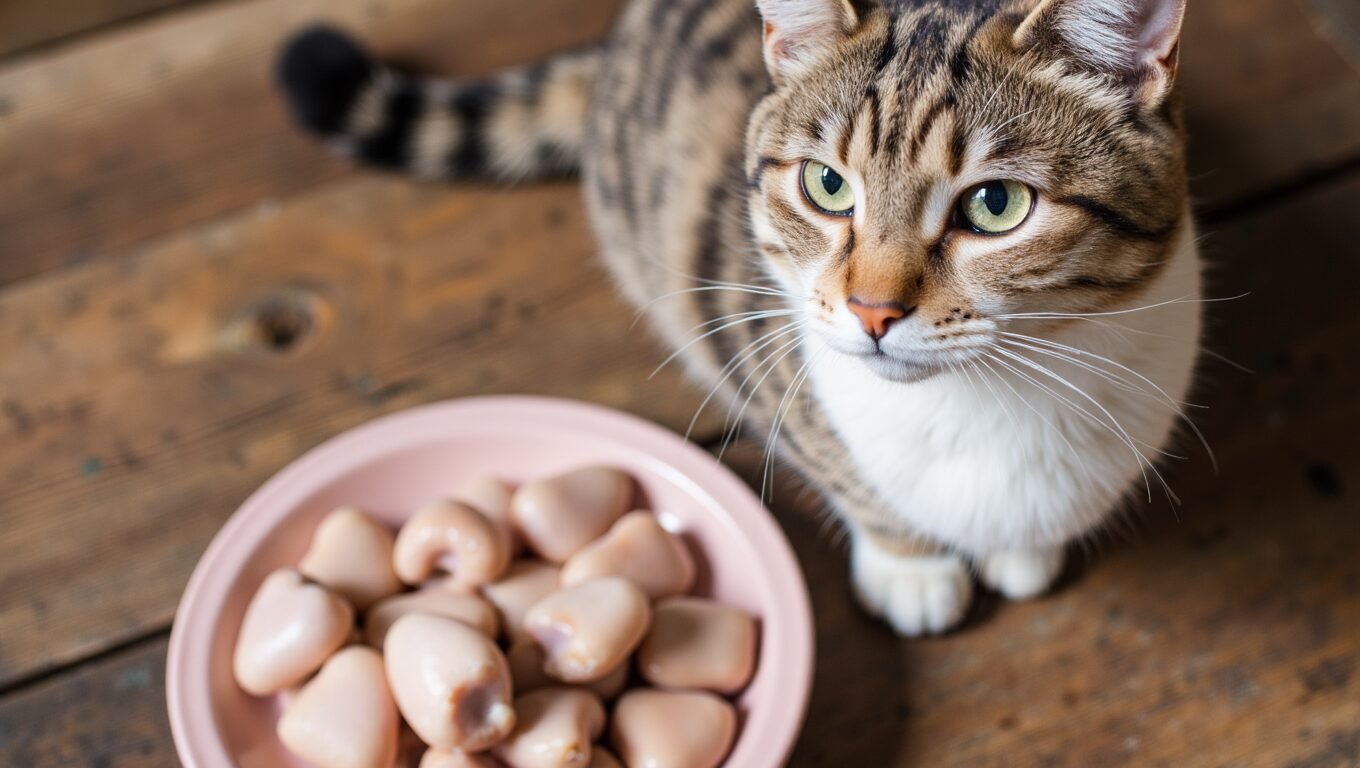
If your cat is a bit picky, you can introduce chicken hearts slowly. Start by offering a small, cooked piece without any seasoning or oil. Boil or steam the hearts for about 10 to 15 minutes. Avoid feeding raw chicken hearts because they might carry harmful bacteria.
Try mixing small bits of cooked chicken heart with their regular food to help them get used to the new taste. Some cats might turn up their nose at first, but patience and gentle encouragement can help. You could also use chicken hearts as an occasional treat—one or two hearts a week is enough.
Tips for Feeding Chicken Hearts Safely
- Always cook chicken hearts thoroughly without any seasoning or oils.
- Limit treats like chicken hearts to no more than 10% of your cat’s diet.
- Watch your cat for any upset tummy signs when you first introduce chicken hearts.
- If your cat enjoys chicken hearts, they can be a tasty and healthy addition to their diet.
By taking it slow and keeping treats in moderation, you’ll help your cat enjoy chicken hearts safely and happily.
🔥 How to Safely Prepare and Serve Chicken Hearts for Cats
Why Should You Cook Chicken Hearts for Your Cat?
Chicken hearts are a tasty, nutritious treat high in protein and taurine, which supports your cat’s heart and eye health. But feeding raw chicken hearts can be risky because they might carry harmful bacteria like salmonella or E. coli. Cooking chicken hearts properly kills these germs and keeps your cat safe. [Source: RSPCA UK]
What’s the Best Way to Cook Chicken Hearts?
To keep chicken hearts healthy for your cat, cook them without adding anything extra. Boiling, steaming, grilling, or baking chicken hearts for about 10 to 15 minutes works well. Avoid using seasonings, oils, or butter because these can upset your cat’s stomach or cause other health problems. If you need to prevent sticking, a tiny bit of unsalted butter is okay—but plain is best. [Source: UK Vet Specialists]
How Much Chicken Heart Should You Give?
Chicken hearts are a good treat but only in small amounts. One or two cooked hearts once a week is enough. Too much organ meat like chicken hearts can throw off your cat’s diet and cause tummy problems like vomiting or diarrhoea. [Source: Vets4Pets UK]
Why Avoid Oils and Seasonings?
Seasonings and oils added during cooking might taste nice to us but can be harmful to cats. Many spices and oils can irritate their digestive system or cause more serious issues. Sticking to plain, cooked chicken hearts ensures your cat enjoys a safe, healthy snack. [Source: RSPCA UK]
Summary
Cook chicken hearts well, keep them plain, and feed them in moderation. This way, you avoid the dangers of raw meat and give your cat a treat packed with nutrients. Your cat will love the taste, and you’ll feel good knowing it’s safe and healthy.
⚖️ How Much Chicken Heart Can a Cat Eat?
Why Should We Be Careful About Feeding Chicken Hearts?
Chicken hearts are a tasty and nutritious treat for cats. They are packed with things cats need, like protein and taurine. Taurine is a special nutrient that helps keep a cat’s heart, eyes, and muscles healthy. But feeding too many chicken hearts can upset the balance of your cat’s diet. That means your cat might not get all the other important nutrients from their normal food.
How Much Chicken Heart Is Safe?
You can feed chicken hearts to your cat, but only a little bit at a time. Experts say chicken hearts should make up no more than 10% of your cat’s total diet. For most cats, that means just one or two cooked chicken hearts once a week as a treat. This small amount gives your cat the benefits without risking any nutritional problems. [Source: Cats Protection UK]
How Often Should Chicken Hearts Be Given?
Because chicken hearts are rich in nutrients, it’s best to give them only occasionally. Think of them as a special treat rather than food your cat should eat every day. Using chicken hearts once a week is enough to add variety and extra nutrition without causing imbalances.
Feeding Chicken Hearts Safely
Always cook chicken hearts before giving them to your cat. Raw chicken hearts can carry harmful bacteria, which might make your cat sick. Cook them by boiling, steaming, grilling, or baking — but don’t use any seasoning, oil, or salt. These extras can harm your cat’s health. Also, avoid feeding too many organ meats like chicken hearts, liver, or kidney as too much can cause stomach issues like vomiting or diarrhoea.
Can Chicken Hearts Replace Regular Cat Food?
Chicken hearts should not replace your cat’s main food. They are not a full meal by themselves. Your cat needs a balanced commercial cat food that meets all their nutritional needs for their life stage, such as kitten, adult, or senior cat food. Chicken hearts should only be a small occasional addition to that diet.
By keeping chicken hearts as a tasty treat once in a while and sticking to your cat’s regular balanced diet, you can make sure your furry friend enjoys variety without risking their health. Always think of chicken hearts as an extra, not the main meal.
⚠️ What Happens if Cats Eat Too Many Chicken Hearts?
Chicken hearts are a healthy treat, but eating too many can cause problems for your cat. Since chicken hearts are rich in organ meat, feeding large amounts can upset your cat’s stomach. You might notice vomiting, diarrhea, or your cat feeling uncomfortable. These symptoms happen because too much organ meat can be hard to digest and disrupt the balance of nutrients your cat needs.
Why Is Moderation Important When Feeding Chicken Hearts?
Moderation means giving your cat small amounts, not too often. Chicken hearts have important nutrients like protein and taurine, which support heart health and muscles. But if they make up more than about 10% of your cat’s diet, it can throw off the balance and cause health issues. So, small amounts as an occasional treat, like one or two cooked chicken hearts each week, is best.
What Precautions Should You Take When Feeding Chicken Hearts?
- Cook the chicken hearts well. Raw chicken hearts can carry harmful bacteria that might make your cat sick. Boil, steam, grill, or bake them without any seasoning or oil.
- Avoid adding salt, spices, or fat. Cats are sensitive to these, and it can harm their digestion.
- Keep treats occasional. Use chicken hearts as a special snack, not a main meal.
Pay attention to how your cat reacts after eating chicken hearts. If you notice any signs of upset stomach or unusual behaviour, pause giving them the treats and check with your vet if needed.
By feeding chicken hearts carefully and in moderation, you can offer your cat a tasty and nutritious bonus without risking their health.
🇬🇧 Should UK Cat Owners Feed Chicken Hearts to Their Cats?
Chicken hearts can be a healthy treat for your cat when fed properly. These small organ meats are rich in high-quality animal protein and contain taurine, an essential amino acid that supports your cat’s heart health, vision, and overall wellbeing. They also provide important nutrients like iron, B vitamins, and zinc, which help keep your cat’s blood, muscles, skin, and eyes in good shape.
It’s important to prepare chicken hearts safely. Always cook them by boiling, steaming, grilling, or baking without any seasonings or oils, which can be harmful. Avoid raw chicken hearts because they might carry bacteria that can make your cat sick. [Source: RSPCA UK]
When you feed your cat chicken hearts, do so in moderation. They should not make up more than 10% of your cat’s diet. A good rule is to offer one or two cooked chicken hearts as a special treat once or twice a week. This way, you can add some variety and nutrition without unbalancing their regular food.
So, if you’re considering adding chicken hearts to your cat’s diet, remember the benefits, keep preparation safe, and feed them as an occasional treat. This approach is a great way for UK cat owners to provide a tasty, nutritious extra that many cats really enjoy.